In the heart of the Amazon, a new generation of technology is emerging as one of nature’s strongest allies. Artificial intelligence and drones are transforming how Brazil monitors, protects, and restores its vast rainforest.
Technological advancements in woodland preservation
Once dependent on satellite images and ground patrols, Brazil’s environmental agencies are now integrating artificial intelligence (AI) and drone surveillance to safeguard the Amazon rainforest. This combination of technology and environmental science has created a powerful new model for forest protection—one that operates faster, more precisely, and at a scale that was once unimaginable.
The Amazon rainforest, covering an area exceeding five million square kilometers, hosts more than three million plant and animal species. It also performs a critical function in moderating the Earth’s climate by absorbing carbon dioxide and emitting oxygen. Nevertheless, this essential ecosystem confronts ongoing perils from illicit logging, deforestation, and uncontrolled fires. Identifying and addressing these hazards promptly has consistently been a major hurdle for those dedicated to conservation.
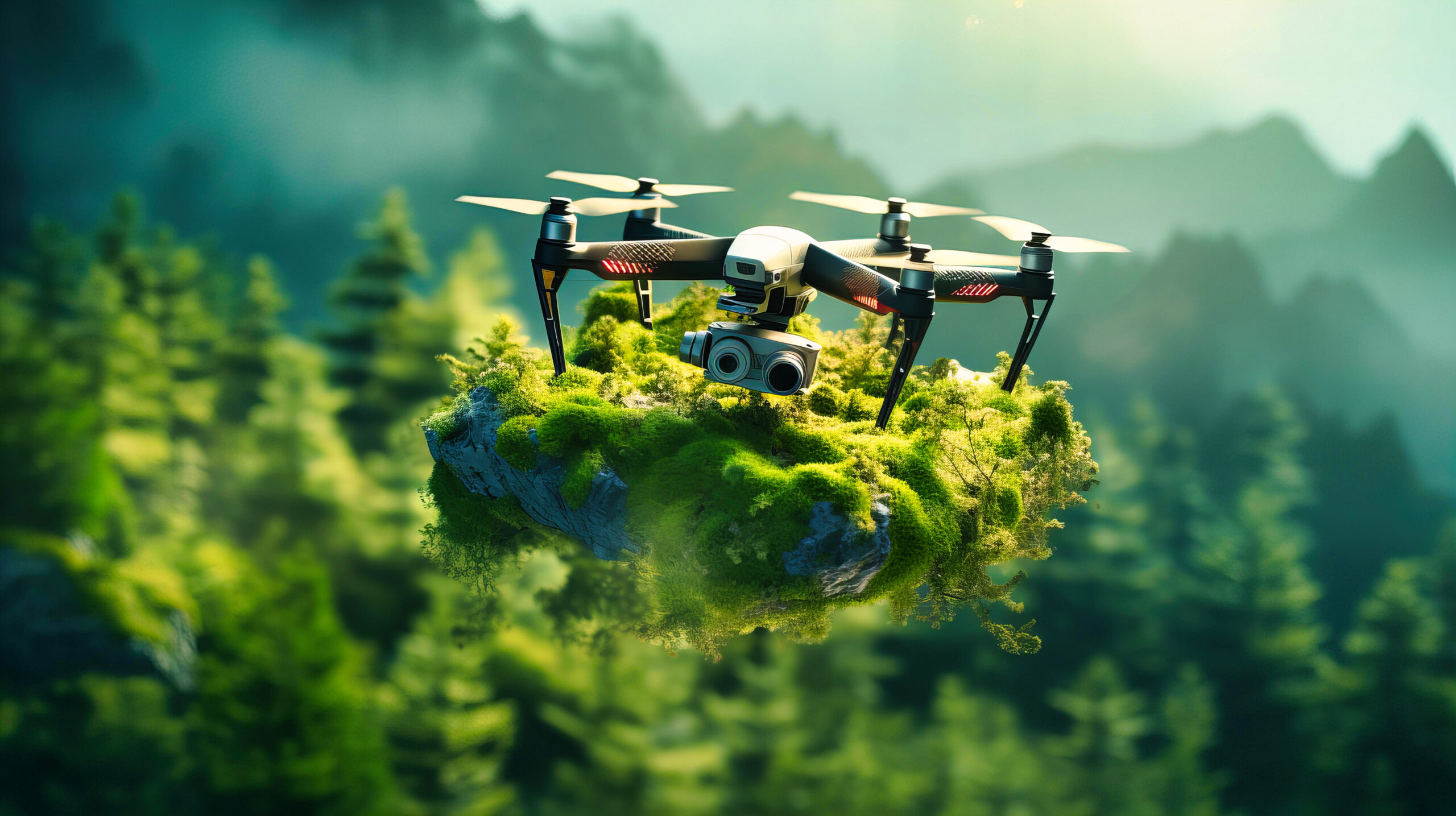
That is now changing. AI-driven systems, working in tandem with drones, are enabling authorities and researchers to identify signs of forest destruction almost in real time. Drones can fly over remote and inaccessible areas, capturing high-resolution images and data that AI algorithms analyze for irregular patterns—such as tree loss, smoke from fires, or illegal logging roads. This process allows for immediate alerts to be sent to local rangers or environmental officials, who can respond before the damage spreads.
A new frontier in environmental monitoring
Organizations like the Brazilian Institute of Environment and Renewable Natural Resources (IBAMA) and several non-governmental groups are increasingly investing in AI-powered solutions. By combining satellite data with on-the-ground drone imagery, these systems can map deforestation patterns with astonishing precision. The technology can differentiate between seasonal tree loss caused by natural events and destructive activities carried out by humans.
Machine learning, a subset of artificial intelligence, is instrumental in driving this change. Through the process of training algorithms with vast datasets of images from both thriving and compromised forest regions, researchers have developed models that can pinpoint initial signs of environmental disruption. These models possess the capability to forecast future locations of illicit deforestation, enabling officials to allocate resources in an anticipatory rather than a responsive manner.
Some drones are equipped with thermal sensors and LiDAR (Light Detection and Ranging) systems, which can penetrate dense forest canopies and capture detailed topographical data. This information helps researchers track biodiversity, monitor the spread of forest fires, and assess the success of reforestation efforts. The integration of these technologies has led to a shift from traditional conservation methods to a more data-driven and predictive approach.
Synergy between pioneering advancements and environmental preservation
The triumph of this technological transformation relies not just on devices but also on the individuals who manage them. Native populations and local forest rangers, who have historically acted as custodians of the woodland, are receiving instruction in drone operation and the interpretation of AI-produced information. Their inherited understanding of the territory, coupled with sophisticated digital instruments, has demonstrated itself to be an effective synergy in safeguarding the Amazon’s fragile equilibrium.
Several Brazilian startups are also contributing to this mission. They are developing cost-effective drones that can cover vast areas and operate autonomously for hours, powered by renewable energy. Some of these companies are partnering with environmental organizations to create shared data platforms, where information collected from drones is automatically uploaded, analyzed, and visualized through interactive maps. These maps not only highlight areas under immediate threat but also track long-term environmental trends.
International collaboration has further strengthened these efforts. Partnerships with global tech firms and research institutions have enabled Brazil to access cutting-edge AI models and cloud-based systems that process enormous volumes of environmental data. This cross-border cooperation has accelerated innovation, ensuring that Brazil remains at the forefront of digital conservation.
From Oversight to Recovery
Technology’s role in the Amazon extends beyond surveillance. Drones are also being used in reforestation projects, dropping thousands of seed pods over deforested areas with remarkable precision. AI helps determine the best species combinations for specific soil and climate conditions, improving survival rates and biodiversity recovery. This automation not only speeds up the process but also reduces the cost and labor typically associated with manual planting.
Furthermore, AI models are helping scientists monitor the health of restored ecosystems. By analyzing data from drone images and environmental sensors, researchers can evaluate soil quality, tree growth rates, and the presence of animal life. Over time, this information provides a detailed understanding of how reforested areas evolve, which techniques are most effective, and where additional interventions may be needed.
These advancements are creating a closed feedback loop of observation, action, and analysis—one that is reshaping the way humanity interacts with nature. With AI and drones working in harmony, forest restoration can become more strategic, measurable, and sustainable.
The impact on people and the planet
Beyond ecological benefits, the deployment of technology in the Amazon has profound social implications. For many rural communities, these innovations have created new job opportunities in data collection, drone operation, and environmental analytics. Programs designed to train local youth in digital skills have emerged, empowering a new generation of conservation technologists.
Moreover, the clarity provided by artificial intelligence and open data systems has heightened public understanding and responsibility. Immediate notifications regarding deforestation empower citizens, reporters, and ecological organizations to monitor illicit operations and urge officials to act promptly. Such a degree of insight was unimaginable merely ten years prior.
However, experts caution that technology alone cannot solve the complex challenges facing the rainforest. Effective policies, political will, and community engagement remain essential. Drones and AI provide powerful tools, but they must be integrated into a broader framework of sustainable development and forest governance.
Looking toward a sustainable future
The fusion of technology and ecology offers a glimpse of what the future of conservation might look like—not just in Brazil but across the planet. As climate change accelerates, the need for intelligent, scalable solutions to protect natural ecosystems has never been greater.
Brazil’s experiment with AI and drone technology is setting a precedent for how nations can use innovation to defend their natural heritage. By combining the precision of data science with the passion of environmental stewardship, the country is redefining what it means to protect the world’s most important rainforest.
In the Amazon’s vast expanse, machines and humans are learning to work together for a common purpose: preserving life itself. As drones soar above the treetops and algorithms learn the rhythm of the forest, a new era of conservation is taking flight—one where technology serves not to dominate nature, but to defend it.