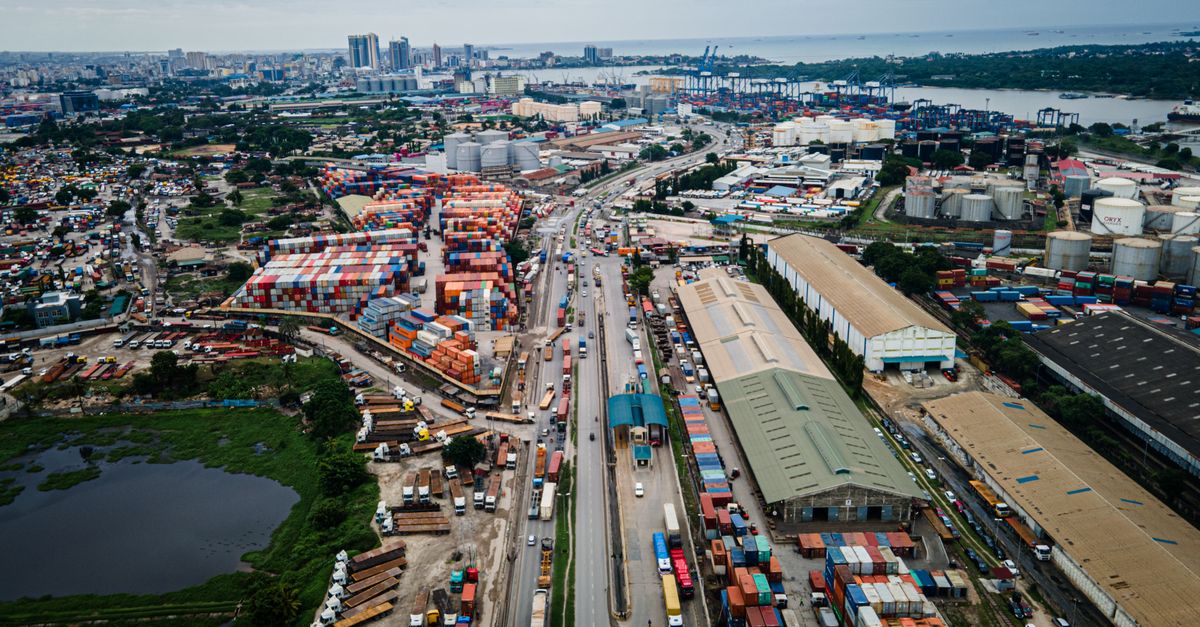

Strategic Progress in Enhancing U.S. Logistics Infrastructure
The United States is swiftly intensifying its logistics infrastructure initiatives to bolster the revival of domestic manufacturing and the growth of international trade, with federal and state entities steering exceptional public and private funding into ports, rail lines, highways, airports, and digital freight networks to address weaknesses revealed by recent global supply chain disruptions, ease congestion, enhance resilience, and reinforce the nation’s standing as a competitive center for advanced manufacturing and worldwide commerce.
Federal Investment and Policy Alignment
A central catalyst behind this acceleration is large-scale federal funding tied to infrastructure modernization and industrial policy. Legislation focused on infrastructure renewal, semiconductor manufacturing, and clean energy production has created direct demand for upgraded logistics networks. Billions of dollars have been allocated to port modernization, intermodal rail facilities, inland waterways, and freight corridor improvements.
The main priorities include:
- Expanding port capacity to accommodate larger vessels and higher container volumes
- Upgrading rail intermodal hubs to reduce dwell times and improve throughput
- Improving highway freight corridors critical to manufacturing clusters
- Enhancing digital infrastructure for supply chain visibility and efficiency
For example, several major West Coast ports have been awarded funds to transition cargo-handling machinery to electric systems and to boost on-dock rail infrastructure, helping cut both congestion and emissions at the same time. Meanwhile, Gulf Coast ports are enlarging their shipping channels to accommodate bigger post-Panamax ships, strengthening their position within global trade networks.
How Reshoring and Nearshoring Drive the Expansion of Infrastructure
The revival of domestic manufacturing, especially in semiconductors, electric vehicles, batteries, and advanced materials, has heightened demand for streamlined logistics networks, as new production facilities appear throughout the Midwest, Southeast, and Southwest, frequently in areas that have long lacked robust freight infrastructure.
States such as Texas, Arizona, Ohio, and Georgia are investing heavily in:
- Industrial park extensions strategically aligned with major interstate corridors
- Rail spurs that link manufacturing facilities to leading Class I rail networks
- Inland ports developed to reduce pressure on heavily trafficked coastal entry points
- Warehouse and distribution center networks that sustain efficient just-in-time operations
In central Texas, the rapid growth of semiconductor manufacturing has prompted coordinated improvements to highways and freight rail connectors to ensure reliable inbound materials and outbound product distribution. Similarly, the Southeast has seen logistics investments aligned with electric vehicle and battery plants, strengthening connections to Atlantic ports.
Upgrading Port Infrastructure and Enhancing Maritime Competitiveness
U.S. ports play a pivotal role in driving global trade growth, and recent initiatives highlight expanded automation, increased digital integration, and stronger sustainability efforts as cutting-edge cargo monitoring tools, automated stacking cranes, and advanced predictive analytics platforms are being adopted to accelerate turnaround and enhance operational performance.
The Port of Savannah, for example, has expanded its container yard capacity and invested in rapid rail connections reaching inland markets, reducing dwell times and raising annual throughput, while on the West Coast, modernization efforts are focused on easing the congestion experienced during peak pandemic disruptions by enhancing appointment systems and extending gate operating hours.
Furthermore, expanding cold storage infrastructure bolsters agricultural export capacity, and enhancements to bulk cargo terminals are underway to streamline the movement of energy and mineral loads essential to clean technology supply chains.
Rail and Intermodal Expansion
Rail remains a cornerstone of long-distance freight movement in the United States. Public-private partnerships between state governments and major freight rail operators are accelerating capacity expansion projects, including double-tracking, grade separations, and new intermodal terminals.
Chicago, the nation’s rail hub, has pursued modernization efforts aimed at cutting freight delays and enhancing the flow of traffic where rail lines converge, while inland ports in states like Kansas and Tennessee are becoming vital links that help shift containers smoothly between rail and truck, relieving strain on coastal gateways.
Intermodal growth reflects a broader strategy: shifting freight from highways to rail reduces congestion, lowers emissions, and enhances long-haul efficiency—an increasingly important consideration as manufacturing volumes rise.
Infrastructure for Air Freight and Online Commerce
The rapid growth of e-commerce and sophisticated high-value manufacturing has spurred extensive development in air freight facilities, leading major airports to establish dedicated cargo zones featuring automated sorting technologies and climate-managed storage suited for pharmaceuticals and electronics.
Memphis and Louisville continue to expand as global air freight hubs, while secondary airports in the Midwest and Southeast are upgrading runways and logistics parks to attract cargo operators. These investments enhance the speed and reliability required for advanced manufacturing supply chains.
Digitalization and Intelligent Logistics Technologies
The expansion of physical infrastructure is now complemented by a surge of digital enhancements, as real-time tracking platforms, predictive demand analysis, and automated customs systems collaborate to reduce freight delays, while pilots involving blockchain-based documentation and artificial intelligence-driven routing aim to streamline the flow of goods across international borders.
The integration of data platforms across ports, railroads, trucking companies, and manufacturers enables:
- Greater transparency in shipment status
- Improved inventory management
- Reduced dwell times and congestion
- Enhanced resilience against disruptions
Such digital capabilities are increasingly critical as manufacturing networks become more complex and time-sensitive.
Regional Impact on the Economy
Accelerated investment in logistics infrastructure delivers substantial economic gains for regions, as construction activity offers immediate job opportunities and enhanced freight links draw sustained industrial capital; states that strengthen their logistics networks become more competitive in attracting global manufacturers that depend on dependable access to both domestic and international markets.
Inland logistics hubs near Columbus, Ohio, and Dallas, Texas, have increasingly drawn large distribution centers and advanced manufacturing facilities due to their extensive multimodal connectivity, while enhanced infrastructure reduces transportation costs, accelerates shipments, and boosts overall supply chain reliability.
Sustainability and Resilience Considerations
Infrastructure development increasingly weaves in sustainability and climate‑resilient approaches, pursuing initiatives like electrifying port equipment, expanding rail networks, and creating alternative fuel corridors to reduce freight‑related emissions. Funding is likewise being invested in flood‑resistant port infrastructure and climate‑responsive designs aimed at countering long‑term environmental risks.
Resilience planning also encompasses expanding gateway options, enhancing inland storage capacity, and bolstering domestic production networks to help mitigate the effects of outside disruptions.
Challenges and Opportunities on the Horizon
Despite the substantial momentum, obstacles persist. Approval bottlenecks, shortages of skilled labor in construction and logistics, and the intricate coordination among federal, state, and private stakeholders can hinder advancement. Funding decisions must carefully weigh short-term congestion relief against long-range strategic goals.
Even so, the convergence of industrial policy, private capital movements, and the reshaping of global supply chains has created a rare window for meaningful structural transformation, in which logistics infrastructure is viewed not only as functional support but as a strategic resource that bolsters a nation’s economic resilience.
The swift enlargement of ports, rail corridors, highways, airports, and digital networks reflects a wider shift: sustaining a manufacturing resurgence and enhancing global trade now depends as strongly on seamless goods movement as on production capacity. As these efforts advance, the United States is reconfiguring its logistics system to support industrial growth, strengthen trade links, and reinforce resilience throughout an ever more complex global economy.