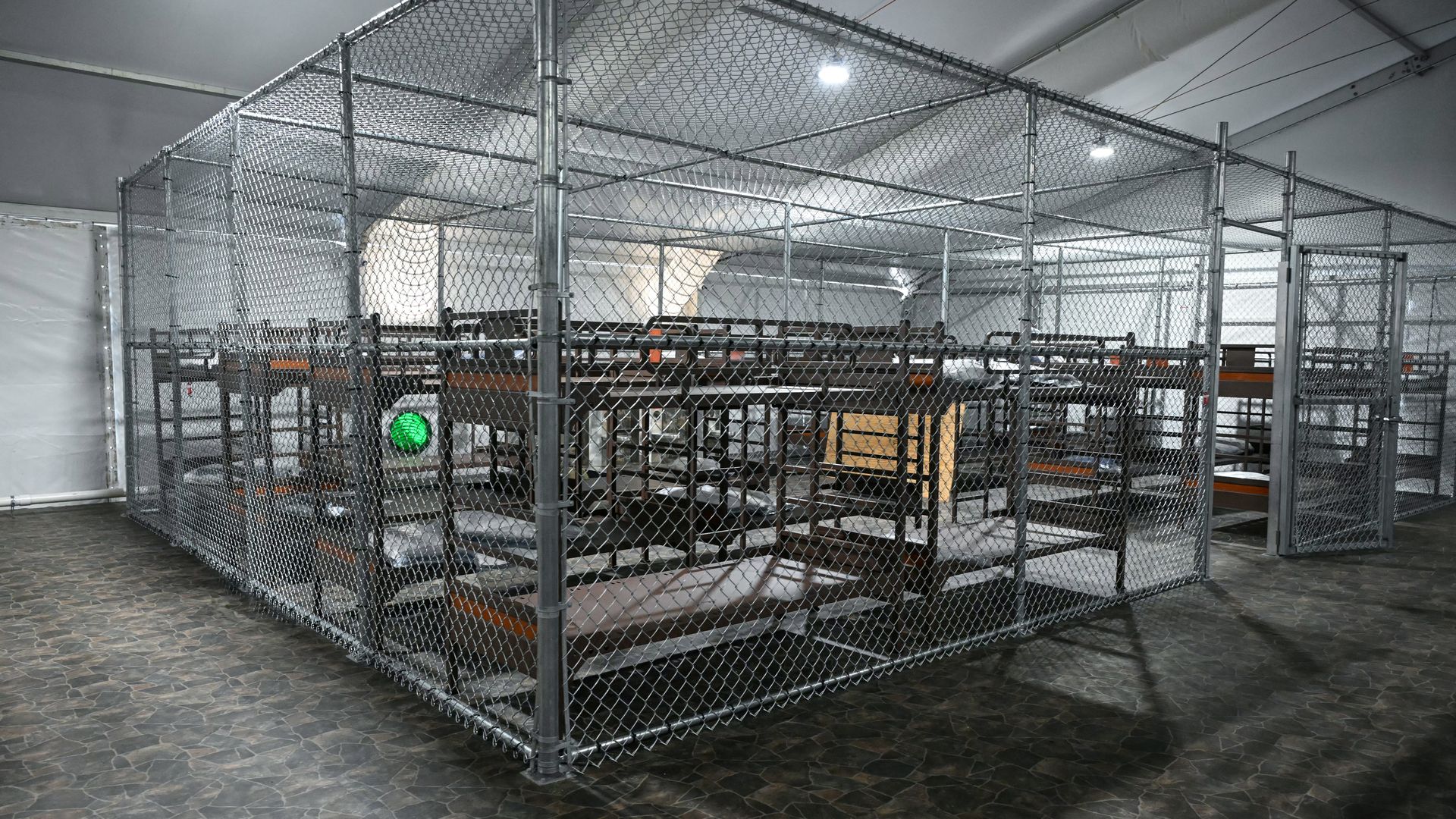
Florida has commenced deportation flights from a freshly opened detention center positioned far inside the state, as an element of a larger plan to enhance immigration control. This center, occupying a secluded site formerly utilized as a juvenile correctional facility and informally known as “Alligator Alcatraz” due to its remoteness and encircling wetlands, is now pivotal to the state’s new initiatives to address unauthorized immigration.
The introduction of these flights represents a major change in how Florida manages immigration procedures. State leaders have committed to enhancing apprehension and deportation activities in the forthcoming months, pointing to issues related to border protection and national immigration strategy. Choosing to use the isolated location highlights the government’s aim to implement these actions with minimal public disruption and greater operational autonomy.
The detention facility, managed under the jurisdiction of the Florida Department of Law Enforcement along with the Division of Emergency Management, forms a component of a state-funded immigration initiative that was founded in 2022. This program, which initially targeted the transfer of migrants to various states, has expanded into a more comprehensive enforcement system concentrating on apprehending and deporting individuals residing in the country without legal authorization.
State authorities report that the upcoming series of deportations will be executed using chartered planes leaving from local airports, with those detained being housed at the countryside location before being sent away. Specific destinations or the number of people processed have not been revealed by the state, although official announcements suggest that operations are anticipated to increase quickly.
The position of the site—encircled by marshlands and reachable solely via a lone road—provides security benefits, yet also poses difficulties concerning monitoring and entrance. Legal supporters and immigration advocacy groups have voiced worries regarding the program’s openness and the capacity of lawyers, relatives, and media to either reach the establishment or connect with the individuals held there.
The legality of a deportation program managed by the state has also been called into question by critics, who note that immigration enforcement is usually under the jurisdiction of the federal government. Although Florida’s officials assert that the program complies with state legislation and supports federal objectives, groups advocating for immigrant rights contend that this strategy could infringe upon constitutional rights and further criminalize migration.
Despite these concerns, Florida’s administration has doubled down on its immigration stance. State leaders have framed the initiative as a response to what they describe as federal inaction, particularly regarding border policy and migrant resettlement. The new enforcement push is being presented as both a deterrent and a logistical solution to what state officials claim is an unsustainable influx of undocumented migrants.
The facility’s use marks a stark departure from previous immigration processing methods. Historically, individuals detained in Florida were processed through federal facilities or released with a notice to appear in court. The state-run program instead allows for direct transfer to a controlled facility, bypassing some of the traditional federal processing mechanisms.
Advocates for the program argue that it enhances public safety and reinforces the rule of law. They point to instances where individuals with prior removal orders or criminal records were found living in the state without authorization. The new system, they claim, enables faster identification and removal of such individuals.
However, immigration policy experts warn that aggressive state-led actions can have unintended consequences. Fear of enforcement may discourage individuals from reporting crimes, seeking medical care, or enrolling children in school. In some communities, news of increased deportation activity has already caused unease, with local organizations reporting reduced participation in public services and community programs.
Funding for the project has also faced criticism. Several tens of millions of dollars have been directed towards backing the program, covering expenses for transportation, accommodations, personnel, and legal matters. Certain legislators have raised concerns about whether this financial outlay produces tangible outcomes or merely supports a political storyline.
The discussion surrounding Florida’s immigration initiative highlights a broader national rift regarding the extent of state involvement in immigration enforcement. While certain voices advocate for increased local authority due to perceived shortcomings at the federal level, others caution that these actions may result in excessive legal measures and breaches of civil rights.
As deportation flights begin and the state prepares to scale up its operations, legal challenges are likely to follow. Civil liberties organizations are already exploring potential lawsuits to challenge the constitutionality of the initiative, and some elected officials have called for greater oversight and accountability.
In the next few months, the direction and effect of Florida’s immigration enforcement strategy will be crucially evaluated. Regardless of whether the approach leads to a lasting policy shift or encounters legal challenges, it is evident that the state is placing itself at the center of a divisive and highly politicized national debate.