The world of rock has lost one of its most distinctive figures. Ace Frehley, the legendary guitarist who helped define the sound and style of Kiss, passed away at the age of 74, leaving behind a monumental legacy that transformed the history of hard rock and inspired generations of musicians.
The news of Frehley’s death was met with an outpouring of emotion from fans and fellow artists across the globe. Known for his signature “Space Ace” persona and his explosive guitar solos, Frehley was more than just a founding member of Kiss — he was the creative spark that helped propel the band from the New York club scene to worldwide stardom. His passing marks the end of an era for rock music and for millions of followers who grew up with the band’s iconic makeup, electrifying performances, and rebellious energy.
The emergence of a rock legend
Paul Daniel Frehley, born on April 27, 1951, in the Bronx, New York, grew up in a working-class household where music and artistic expression were highly valued. From a young age, Frehley displayed an innate aptitude for the guitar, learning to play by ear and drawing inspiration from prominent figures in blues, rock, and rhythm and blues. His distinctive approach blended melody and distortion in a manner that was difficult to imitate, and by the early 1970s, his technical prowess and captivating stage presence were already gaining recognition within New York’s burgeoning rock community.
In 1973, when Frehley answered an ad placed by bassist Gene Simmons and rhythm guitarist Paul Stanley, the chemistry was immediate. Along with drummer Peter Criss, they formed Kiss — a band that would go on to revolutionize the music industry with its theatrical performances, pyrotechnic shows, and unmistakable visual identity. Frehley’s input was instrumental in shaping the band’s sonic direction, contributing not just as a guitarist but also as a songwriter and performer who brought depth to the group’s larger-than-life image.
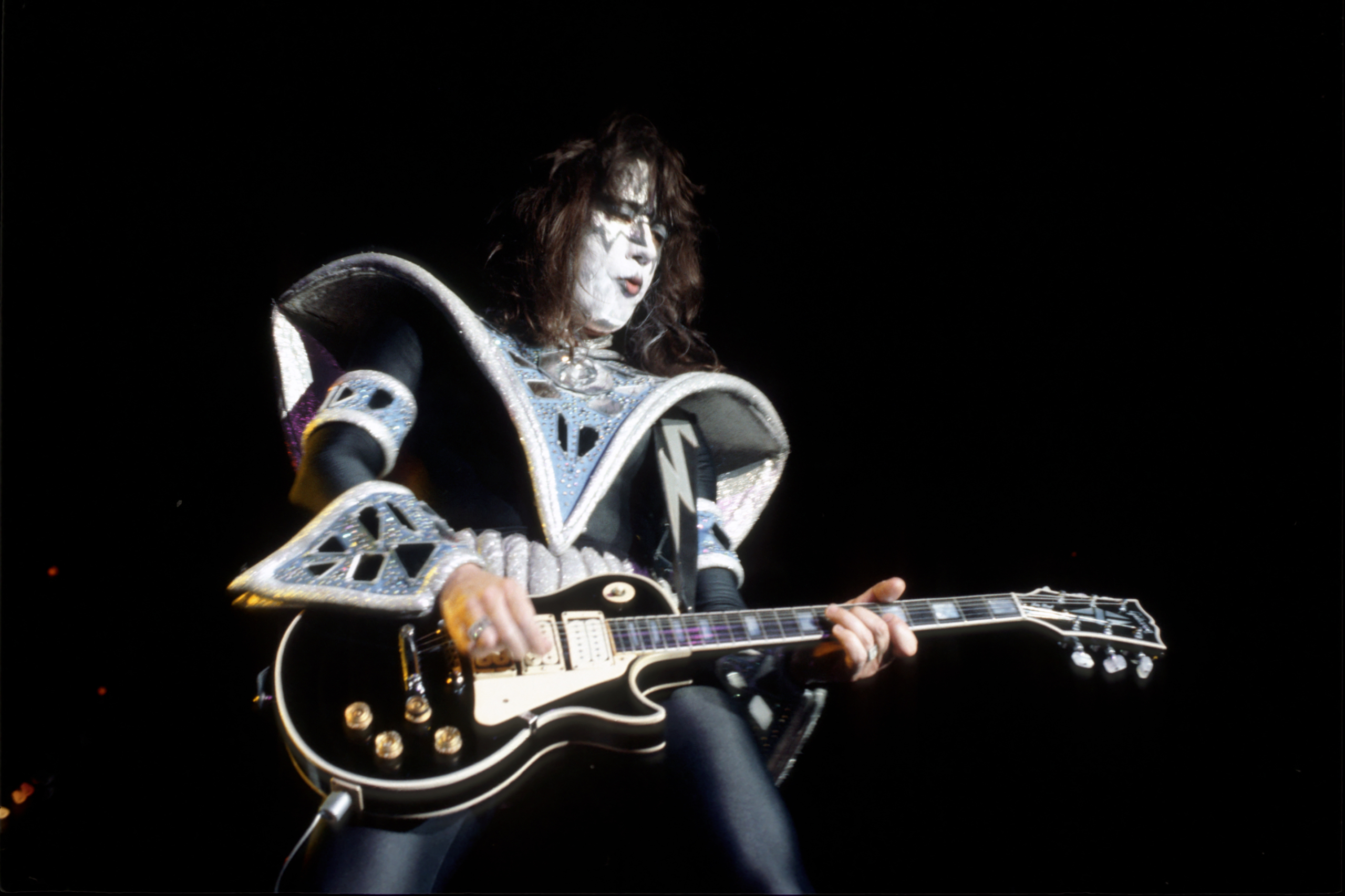
His guitar work on songs like “Shock Me,” “Cold Gin,” and “Parasite” became the stuff of legend. The use of custom Les Paul guitars fitted with smoke bombs and light effects turned his solos into visual spectacles, elevating Kiss concerts into experiences that blurred the line between music and performance art.
Artistic brilliance and individual challenges
While Frehley’s artistic talent was clear, his tenure with Kiss was also characterized by internal strife, fatigue, and challenges related to celebrity. The 1970s proved to be a tumultuous period for the ensemble, featuring consecutive tours, constant media attention, and the demand to perpetually surpass their previous achievements. Frehley, who frequently favored concentrating on the musical aspect over the theatrical display, found himself in disagreement with the band’s progressively commercial trajectory.
Despite internal tensions, his contributions remained essential. In 1978, Kiss released solo albums from each of its members, all under the Kiss brand — and it was Frehley’s record that received the most critical and commercial success. His single “New York Groove,” a cover of the Hello song, climbed the charts and became one of his signature hits, reaffirming his individual talent beyond the Kiss persona.
Nevertheless, the demanding rhythm of touring, studio work, and continuous public scrutiny exacted a heavy price. Frehley battled with addiction and exhaustion, culminating in his exit from Kiss in 1982. This split proved challenging for both the group and its admirers, given Frehley’s role as a foundational creative member. Still, his departure enabled him to forge his individual musical journey, where his enthusiasm for unadulterated, guitar-centric rock could thrive unhindered.
Redefining the Space Ace
After leaving Kiss, Ace Frehley launched his solo career, forming the band Frehley’s Comet in 1984. His new project quickly gained traction, with albums like Frehley’s Comet (1987) and Second Sighting (1988) showcasing his distinctive guitar sound and songwriting style. Though he never reached the commercial heights of Kiss, Frehley earned respect as a solo artist committed to authenticity and musical freedom.
His live performances were personal yet impactful, giving admirers a deeper insight into the individual beneath the “Space Ace” persona. Frehley’s concerts were driven by fervor and appreciation, frequently featuring touching narratives from his formative years and tales from his tenure with Kiss.
In subsequent years, he emerged as a cult figure within the rock scene—a symbol of endurance, uniqueness, and the pure essence of rock ‘n’ roll. He kept putting out records throughout the 2000s and 2010s, including Anomaly (2009) and Spaceman (2018), both lauded for embodying the raw power characteristic of his initial creations.
The enduring impact within and outside of Kiss
Ace Frehley’s influence on rock guitar is immense. His melodic phrasing, creative use of effects, and balance between technical skill and emotional expression inspired countless musicians. Artists ranging from Slash (Guns N’ Roses) to Dave Grohl (Foo Fighters) have cited him as a key influence in their musical development.
His impact also extended beyond sound. Frehley helped shape the very concept of the rock star as a cosmic, theatrical figure — a role that combined musicianship, mystique, and visual storytelling. His “Spaceman” persona became one of the most recognizable in rock history, inspiring not only guitarists but also artists in fashion, design, and film.
In 1996, following a separation of almost 15 years, the initial Kiss lineup came together again for a global tour. This was a dream realized for countless fans, offering an opportunity to witness the four founding members performing together once more, adorned in their complete makeup and splendor. Frehley’s comeback infused the band’s shows with genuine character and a sense of the past, demonstrating that his dynamic with Stanley, Simmons, and Criss remained captivating.
Although he eventually parted ways with Kiss again in the early 2000s, Frehley maintained cordial relationships with his former bandmates in later years, expressing gratitude for the legacy they built together.
Homages from the {{music}} industry
After news of his passing broke, accolades flooded in from all corners of the music world. Paul Stanley characterized Frehley as “a rock brother whose guitar revolutionized everything.” Gene Simmons called him “a visionary whose musicianship was the core of our sound.” Admirers congregated outside the initial locations where Kiss made their debut, placing flowers, candles, and classic mementos in his memory.
Younger musicians also contributed to the wave of tributes. Tom Morello, recognized for his involvement with Rage Against the Machine, described Frehley as “a trailblazer who demonstrated that attitude and creativity could coexist.” Artists from groups such as Metallica and Foo Fighters recounted how Ace’s guitar riffs motivated them to start playing the instrument.
Even outside the rock world, tributes emerged. The Bronx borough, where Frehley was born, projected images of his “Spaceman” persona onto the walls of the borough hall, celebrating him as one of the area’s most iconic cultural exports.
A timeless legacy of sound and spirit
Ace Frehley’s passing is more than the loss of a musician — it’s the closing of a chapter in rock history. Few artists have embodied the raw excitement, rebellion, and imagination of the genre the way he did. His music continues to inspire both veteran fans and young listeners discovering the magic of classic rock for the first time.
His artistry reminds the world that music, at its core, is about connection — about the spark that ignites when melody, rhythm, and emotion collide. Frehley’s guitar was that spark for millions, lighting up arenas and leaving echoes that will resonate for decades to come.
Even though he might no longer be with us, his impact lives on in every musical note that propels his essence. From the powerful vigor of Kiss’s initial records to his individual ventures into audio and aesthetics, Ace Frehley’s musical legacy is everlasting—a testament that genuine rock icons don’t vanish; they merely transition to a different platform.