
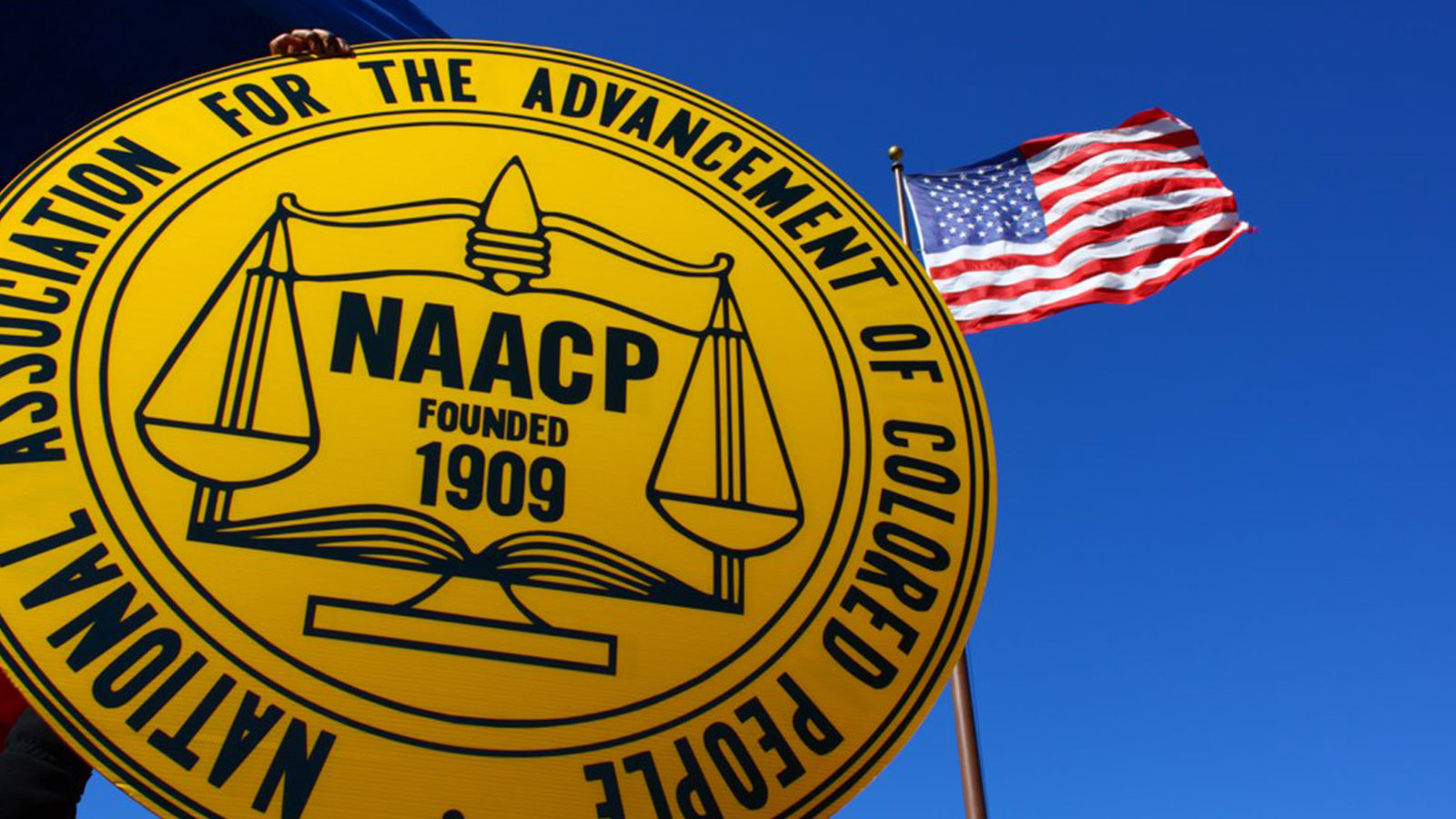
An intensifying clash over voting rights in the United States is extending into college athletics, bringing athletes, universities and civil rights groups into conflict over political representation and racial equity. The NAACP’s newest initiative positions Black student-athletes at the forefront of a nationwide dialogue about authority, impact and responsibility.
A new front in the fight over voting rights
The debate surrounding voting access and political representation in the United States has entered a new phase following a recent Supreme Court ruling that altered the interpretation of protections under the Voting Rights Act. In response, the NAACP introduced a campaign urging Black student-athletes to reconsider committing to certain Southern universities located in states where lawmakers have pursued changes to congressional maps that critics argue weaken Black political representation.
The campaign known as “Out of Bounds” captures the rising frustration of civil rights groups who contend that political leaders in several Southern states are eroding decades of gains won during the Civil Rights Movement. The organization maintains that universities profiting culturally and financially from Black athletic talent should not stay silent while voting districts with substantial Black communities are dismantled or reconfigured.
The controversy deepened once the Supreme Court determined that using race to form two majority-Black congressional districts in Louisiana amounted to an unconstitutional racial gerrymander, a decision praised by those who contend that electoral maps should avoid strong racial emphasis and criticized by others who caution it could erode minority voting power throughout the South.
For many activists, the concern goes beyond one court case. They view the ruling as part of a broader transformation in voting laws and district boundaries that could significantly affect political representation for Black communities in multiple states. The NAACP campaign attempts to apply economic and cultural pressure through college athletics, an industry that generates billions of dollars and relies heavily on Black athletes, particularly in football and basketball programs.
College sports become part of the political conversation
The universities highlighted by the campaign are primarily connected to the Southeastern Conference, widely known as the SEC, one of the most influential athletic conferences in the United States. Schools located in Alabama, Texas, Georgia, Tennessee, Louisiana, Mississippi, South Carolina and Florida are among those receiving increased scrutiny from activists.
Several of these institutions operate football programs with national reputations that draw huge television viewership, lucrative sponsorships and intense recruiting interest. Programs like the University of Alabama, the University of Georgia, the University of Texas and the University of Mississippi have evolved into cultural juggernauts whose influence reaches well past the realm of sports.
Civil rights advocates argue that the visibility and financial influence of these universities give them the ability to influence political conversations within their states. According to supporters of the boycott effort, athletic departments and university leadership should publicly defend voting access and fair representation rather than remain neutral.
The campaign has also revived enduring debates over how race intersects with college athletics, as Black athletes have long been pivotal to the achievements of major university sports programs, especially in the South, where college football holds deep cultural importance.
At the same time, these universities remain situated in states that long opposed racial integration during the Civil Rights era, and activists note that campuses now praised for athletic diversity once served as strongholds of resistance to integration. The NAACP campaign aims to link that historical backdrop to ongoing discussions about voting rights and civic participation.
Supporters of the movement believe athletes possess unique influence because their decisions directly affect recruiting, television contracts, ticket sales and donor engagement. They argue that even a modest decline in top athletic recruits could pressure universities and state leaders to reconsider policies viewed as harmful to minority communities.
The lasting influence of the Voting Rights Act comes under fresh examination
The Voting Rights Act of 1965 stands as one of the most pivotal legislative milestones in American history, crafted at the peak of the Civil Rights Movement to dismantle the discriminatory voting practices that had long restricted Black Americans from fully taking part in elections.
For decades, portions of the South operated under federal oversight requiring states with histories of racial discrimination to obtain approval before changing election laws or redrawing district maps. Many activists believe those protections helped increase minority political participation and representation.
However, a series of court decisions over the last decade has gradually reduced federal oversight mechanisms established under the law. Critics argue these changes have opened the door for states to redraw districts in ways that dilute minority voting power while technically complying with constitutional standards.
The recent Louisiana ruling has emerged as a powerful emblem of these wider worries, and civil rights organizations are increasingly concerned that comparable legal reasoning may soon be deployed to contest majority-Black districts in other states. Just days after the ruling, legislators in Tennessee enacted revised district maps that split the state’s lone majority-Black congressional district into multiple districts that tend to favor Republican candidates.
Political leaders backing the revisions maintain that the maps stand as legally sound and politically equitable, while Republicans across several Southern states have welcomed the Supreme Court ruling, portraying it as progress toward redistricting practices that do not rely on racial considerations.
Opponents strongly disagree. Demonstrations quickly emerged across parts of the South, including marches and gatherings in Alabama at historically significant locations tied to the Civil Rights Movement. Protesters warned that the erosion of voting protections threatens hard-fought gains achieved over generations.
The issue has become especially emotional because it touches on historical memory. Communities that once faced literacy tests, voter intimidation and systemic exclusion now fear that political influence could again diminish through modern legal and procedural mechanisms.
Black athletes and their far-reaching economic impact
The NAACP campaign underscores a broader debate over how athletes should engage in political and social activism, as professional and college players have, over the past decade, increasingly relied on their public platforms to address racial inequality, policing, voting rights, and broader social justice issues.
Some observers argue that student-athletes now wield influence reaching far beyond the playing field, as top recruits can shape television viewership, drive merchandise revenue and boost donor engagement, positioning them as key figures within the commercial framework of collegiate sports.
Advocates backing the boycott contend that universities frequently draw on Black culture and athletic talent yet fall short in politically supporting Black communities. By shifting their commitments toward historically Black colleges and universities, supporters aim to empower athletes to bolster institutions that have long uplifted Black students and neighborhoods.
The NAACP has encouraged recruits, alumni and fans to support HBCUs financially and culturally. Historically Black colleges have long played a critical role in education, activism and leadership development within the United States. Although many HBCUs operate with fewer financial resources than major SEC programs, they continue to produce influential leaders, athletes and professionals.
The debate has generated intense reactions online and within sports media circles. Some supporters describe the strategy as a peaceful and effective form of economic activism similar to previous boycotts used during the Civil Rights Movement. Others question whether student-athletes should carry the burden of responding to complex political disputes.
Critics of the campaign claim that athletes should not feel compelled to give up academic or sports opportunities due to political choices made at the state level, and some maintain that universities themselves often lack authority over legislative measures enacted by state governments.
Still, supporters maintain that financial pressure has historically played a significant role in advancing civil rights causes. They point to examples where economic consequences forced institutions and governments to reconsider discriminatory policies.
Universities under pressure to respond
The campaign places university administrators and athletic leaders in a delicate position. Many colleges attempt to avoid direct involvement in partisan political disputes, especially in states where public funding and political relationships are important.
Nevertheless, staying quiet can also draw criticism, as activists maintain that institutions benefiting from diversity and inclusion efforts should show a clear commitment to safeguarding democratic participation and ensuring equal representation.
The Southeastern Conference has confronted political and racial disputes before. In 2020, its leadership openly backed initiatives to revise Mississippi’s state flag, which then displayed Confederate symbols. That move showed that athletic organizations are capable of shaping public dialogue when sufficient pressure mounts.
Some analysts suggest that universities could encounter rising pressure from students, alumni, and athletes to take more assertive public stances on social justice in the coming years, and as college sports expand into a multibillion‑dollar sector, the sense of institutional responsibility is shifting as well.
Recruiting may soon serve as one of the clearest signs of the campaign’s impact, as shifts in elite athletes’ commitments toward other universities or HBCUs could heighten pressure on administrators from donors and fans worried about preserving competitive athletic programs.
While these initiatives may show promise, their lasting impact is still unclear, as college recruiting choices hinge on many elements such as facilities, coaching teams, academics, visibility options and financial factors, and although political activism can shape the decisions of some athletes, it may leave others largely unaffected.
A broader national debate beyond sports
Although the campaign focuses heavily on Southern universities and athletics, the underlying issues extend far beyond college sports. The debate reflects deeper national disagreements about race, political representation and the future interpretation of civil rights protections in America.
For supporters of stronger voting protections, the current moment represents a critical test of whether minority communities can maintain meaningful political influence amid changing legal standards. For opponents, the focus on race in district mapping raises concerns about constitutional fairness and electoral neutrality.
Athletes and universities now highlight how tightly politics, culture, and sports intertwine across contemporary American life, with college campuses increasingly emerging as public stages where nationwide conversations about identity, democracy, and equality play out.
Whether the outcome of the NAACP campaign reshapes recruitment trends or affects legislation is still uncertain, but what is clear is that the dialogue about voting rights and representation has moved beyond courtrooms and legislative halls, extending into stadiums, athletic departments, and university communities across the South.
As the nation moves closer to another major election cycle, tensions surrounding redistricting, civil rights protections and political participation are likely to remain central issues. The growing intersection between athletics and activism suggests that athletes themselves may continue playing a larger role in shaping social and political discourse in the years ahead.