
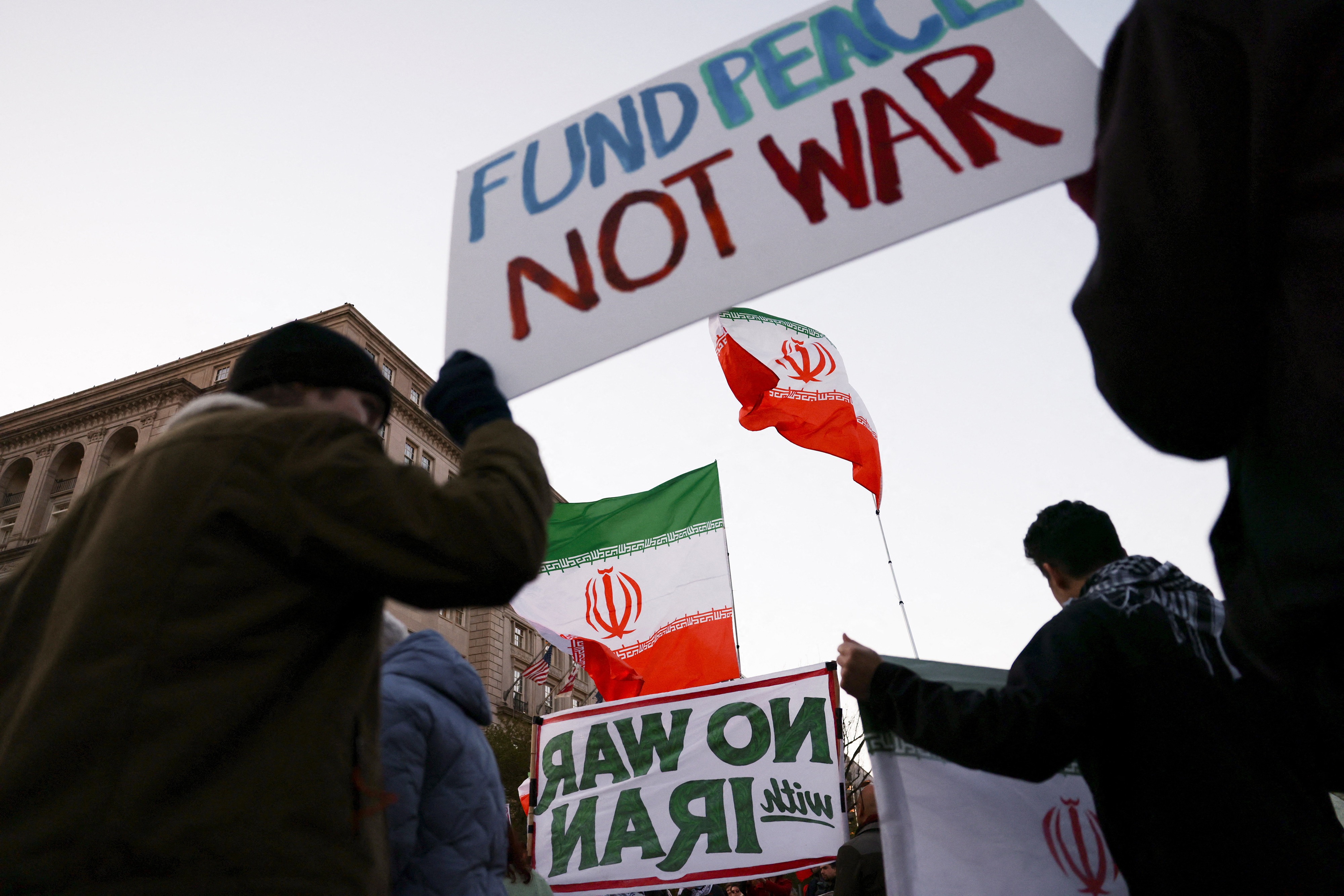
Congress returns to a crowded agenda defined by frozen homeland security funding, competing immigration proposals, ethics probes involving several lawmakers, and a renewed discussion about the U.S. military’s stance toward Iran, all unfolding as key surveillance legislation deadlines near.
Debate over homeland security funding and immigration enforcement
Lawmakers in Washington are facing renewed pressure to resolve funding for the Department of Homeland Security, which has remained partially unfunded for an extended period due to deep disagreements between the two parties. The dispute centers on how to allocate resources across agencies responsible for border security, immigration enforcement, and broader national security operations.
A key point of division involves Immigration and Customs Enforcement (ICE) and Customs and Border Protection (CBP). Republican lawmakers have pushed for a funding strategy that separates these agencies from the broader DHS budget, allowing them to be financed through a standalone, party-line measure. In contrast, Democrats have resisted any funding package that increases support for immigration enforcement without broader reforms to how those agencies operate.
The political impasse has resulted in competing legislative strategies. House Republicans have increasingly aligned with a Senate approach that would fund most DHS functions through the standard bipartisan appropriations process while isolating ICE and CBP funding into a separate Republican-led bill. This structure is intended to advance core priorities without requiring cross-party agreement, but it has also intensified partisan tensions over the scope and direction of immigration policy.
Within Republican leadership, figures such as John Thune and John Barrasso have emphasized the need for coordinated action to advance funding measures in the Senate. At the same time, negotiations have been complicated by procedural disagreements and questions about sequencing—particularly whether separate funding bills should be passed before broader DHS appropriations are finalized.
Democrats, meanwhile, have stayed united in insisting that any boost in immigration enforcement funding be coupled with policy reforms that strengthen oversight, raise humanitarian standards, and refine enforcement practices, and without those provisions, they have indicated they would oppose isolated funding measures for ICE and CBP.
Congressional budget tactics and the path toward reconciliation
Beyond short-term funding clashes, congressional Republicans are advancing a wider fiscal approach built around the budget reconciliation process, a mechanism that enables specific budget-focused bills to clear the Senate with only a simple majority, thereby sidestepping the customary 60-vote requirement used to block a filibuster.
Republican leaders regard reconciliation as an essential tool for pushing forward elements of their legislative agenda, especially immigration enforcement funding and other priorities tied to border security policy, and the method is structured to allow specific measures to advance without depending on Democratic backing, although it demands strict compliance with budget rules and constraints on policy scope.
Senate Republicans have indicated that they are increasingly coalescing around this approach, with lawmakers like Lindsey Graham portraying the initiative as gathering pace and highlighting renewed internal coordination after conversations with party leaders, while John Barrasso has likewise presented the caucus as unified in its plan to move a reconciliation package forward within a set timeframe.
The process nevertheless remains intricate, as Senate procedural rules mandate that a budget resolution be approved before any reconciliation measure can advance, a requirement that has turned into a central point of bargaining while leadership seeks to push a resolution through the chamber by late April, though any resulting reconciliation bill is still expected to face strict limits that may narrow its overall reach.
Uncertainty also remains over whether defense or military-related funds connected to wider geopolitical dynamics will be part of the package. Some lawmakers argue the final bill should stay tightly targeted to ensure sufficient support for approval, while others maintain that it ought to include broader strategic financing considerations.
Republican leadership has also explored procedural shortcuts, including the possibility of bypassing committee stages to accelerate floor consideration. While such an approach could speed up the legislative timeline, it may also reduce opportunities for bipartisan input and increase intra-party disagreements.
Oversight, ethical probes, and potential expulsions within the House
Amid ongoing budget discussions, the House of Representatives is also navigating a range of ethics inquiries and possible disciplinary measures involving several of its members, adding further procedural and political complications as lawmakers consider whether to move forward with expulsion in a number of prominent cases.
One of the most closely followed developments centers on Eric Swalwell, who recently stepped back from a gubernatorial bid after renewed examination and public claims regarding past behavior. Swalwell has rejected the sexual assault accusations and maintains that earlier misconduct allegations are inaccurate, while acknowledging lapses in judgment in previous personal conduct. The episode has sparked fresh debate among lawmakers about expectations for behavior and mechanisms for accountability.
Republican Representative Tony Gonzales has separately come under scrutiny for acknowledging an extramarital relationship with a staff member, a breach of House workplace rules. Further claims have emerged about his contacts with another former campaign aide, adding complexity to the ongoing ethics review. Gonzales has characterized his conduct as a regrettable error, though his office has yet to fully respond publicly to all of the allegations.
Several other members remain under evaluation. Representative Cory Mills is currently the subject of an active ethics inquiry addressing allegations tied to campaign finance activity and questions about conduct, including reported claims of improper behavior and possible misuse of authority involving federal contracting. These assertions are still under review and have not resulted in any formal disciplinary measures.
In addition, Representative Sheila Cherfilus-McCormick is now confronting possible sanctions after an internal ethics review identified concerns. The situation centers on claims involving federal relief funds and their purported link to political campaign financing. The lawmaker has rejected any misconduct and is simultaneously dealing with separate legal actions connected to the issue.
These cases have prompted discussions about whether expulsion votes should be considered in the House. Expulsion requires a two-thirds majority, a threshold that historically has been difficult to reach except in rare circumstances. The most recent example occurred when George Santos was removed from office following a combination of ethics findings and criminal charges.
Despite calls from some members for stronger disciplinary action, others have argued that expulsion should follow the completion of formal ethics investigations to ensure due process. As a result, the timing and likelihood of any votes remain uncertain.
Rising international frictions and Iran-focused legislative decisions
Foreign policy is also expected to play a significant role in congressional activity, particularly regarding the ongoing situation involving Iran. Lawmakers are preparing for additional votes related to the president’s authority to engage in military action without explicit congressional approval, a constitutional issue that has long been debated between the executive and legislative branches.
The debate has grown more heated as recent military shifts and rising rhetoric highlight U.S. involvement in the area, with President Donald Trump signaling a tougher stance toward Iran through remarks about deploying U.S. assets and exerting pressure over key maritime corridors like the Strait of Hormuz, a vital channel for global energy transport.
In the Senate, Democratic leadership under Chuck Schumer has continued to push for measures that would restrict unilateral executive military action. Supporters of these efforts argue that Congress must reaffirm its constitutional role in authorizing armed conflict, particularly in situations with long-term geopolitical consequences.
However, earlier efforts to curb executive power on this matter have encountered pushback from Republican lawmakers, who have typically favored granting presidents wider discretion in national security choices. The political landscape has grown more complex as tensions rise and public opinion shifts concerning U.S. participation in foreign conflicts.
Public polling data has indicated a divided national perspective on the conflict, with a majority expressing concern about the direction and clarity of U.S. strategy. Many respondents have questioned whether the objectives of the policy are clearly defined and whether the administration has articulated a consistent plan for achieving them.
Economic considerations have increasingly entered the discussion, as climbing energy costs and interruptions across global supply networks have highlighted how instability along major maritime trade corridors might affect domestic markets. Lawmakers from both parties have noted that prolonged disruption could amplify inflationary pressures and raise expenses for consumers.
Approaching deadline for surveillance legislation and escalating legislative pressure
Adding further complexity to the congressional agenda is the upcoming expiration of Section 702 of the Foreign Intelligence Surveillance Act (FISA). This provision allows U.S. intelligence agencies to collect communications from non-U.S. persons located abroad without a warrant, a tool widely used in national security operations.
Backers of renewal maintain that the authority plays a vital role in monitoring foreign threats and preserving intelligence capabilities within an ever more complex global landscape. They assert that the program remains a key element in both counterterrorism operations and cybersecurity initiatives.
Nonetheless, civil liberties advocates and several members of Congress have voiced worries about the incidental gathering of communications that involve U.S. citizens, arguing that more robust protections are required to avert misuse or excessive intrusion, especially when information obtained from foreign targets unintentionally encompasses domestic communications.
The debate over FISA has persisted for years, with repeated attempts to introduce reforms that balance national security needs with privacy protections. As the expiration date approaches, lawmakers are under pressure to reach a compromise that can secure sufficient support in both chambers.
The convergence of these challenges—disputes over funding, ongoing ethics probes, strains in foreign policy, and impending surveillance authority expirations—has produced an unusually crowded legislative agenda, and Congressional leaders must balance rival priorities while preserving party cohesion and steering clear of procedural stalemates.
As talks advance, the results of these discussions are anticipated to influence immediate policy choices as well as the wider political landscape in the coming legislative cycles.