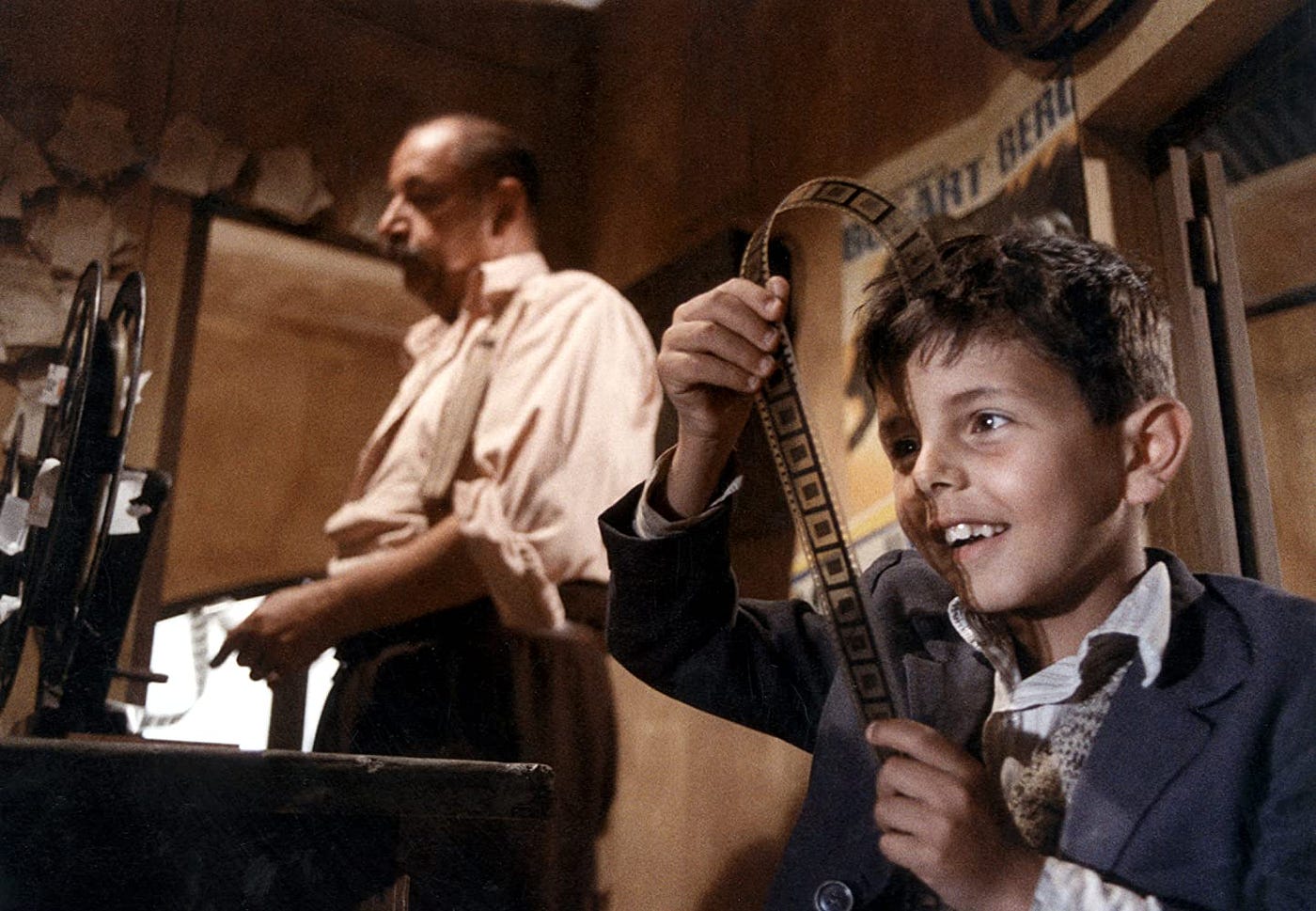
‘Cinema Paradiso,’ helmed by Giuseppe Tornatore, remains a timeless tribute to the enchanting impact of film. Released in 1988, this Italian classic has left a lasting mark on viewers worldwide, echoing well past its initial era and location. Fundamentally, ‘Cinema Paradiso’ offers much more than a wistful tale of growing up; it serves as a meaningful tribute to the craft of making films, highlighting cinema’s ability to transform lives, stir feelings, and preserve memories.
The Metafilmic Structure: Cinema as Character and Catalyst
At the core of ‘Cinema Paradiso’ lies the renowned projectionist, Alfredo, along with his student, Salvatore, who is also referred to as Toto. The story spans multiple decades, with the Cinema Paradiso theater functioning as both a physical and symbolic center of the town. Instead of just being a simple setting, the cinema itself becomes a character, crucial to the community and the main character’s sense of self.
The theatre transforms into a communal space where social barriers fade away. In lively and personal scenes, locals from diverse walks of life come together, bonded by shared laughter, emotions, and a collective sense of wonder in front of the shimmering screen. Tornatore highlights the community-building and unifying power of cinema, turning the act of watching films into a ritual that bridges age and social differences.
Cinema as Remembrance: The Heartfelt Essence of Nostalgia
Cinema Paradiso intricately intertwines recollection and yearning, using the methods of filmmaking to summon a sense of nostalgia for both Toto and the viewers. From the opening scenes that show Salvatore as a successful director troubled by his past, to the repeated theme of vintage film reels and celluloid, the process of recalling is equated with the experience of watching movies. The movie’s shifts in time—between Toto’s younger years, teenage days, and adult life—resemble how cinema frequently revisits and recontextualizes events, safeguarding them from the decay of time.
An important instance is the concluding montage of the movie, a series of romantic scenes that were censored but saved by Alfredo for Toto. This montage acts as an artistic expression; it serves as both a present and an act of recovery, bringing forgotten kisses and affection back to public consciousness. These scenes emphasize film as a medium for emotion that persists even when physical locations such as the cinema disappear or are demolished.
Technical Homage: Crafting a Lyrical Cinematic Language
Technically, ‘Cinema Paradiso’ is informed by and reverent of classic film idioms. Tornatore imbues the visual storytelling with elements reminiscent of Italian neorealism, employing naturalistic performances and authentic settings. The technical craftsmanship—from Ennio Morricone’s lush, evocative score to the warm, sepia-toned cinematography—serves as a nod to cinema’s history and its profound sensory impact.
Moreover, the film-within-a-film motif permeates the narrative, referencing classics from directors like Visconti and Chaplin. Clips from these films appear on the Paradiso’s screen, offering both a visual education and an affectionate acknowledgment of the broader film canon. This intertextuality roots the story within cinema’s collective heritage, paying tribute to the artistry of filmmaking while inviting audiences to partake in a shared cultural memory.
Mentorship and Transmission: The Projectionist’s Role
One of the film’s richest layers is its meditation on mentorship and the transmission of cinematic love. Alfredo’s relationship with Toto exemplifies the passing of knowledge, passion, and appreciation for film. By teaching Toto the intricacies of projection—and, implicitly, the beauty of storytelling—Alfredo acts as both craftsman and philosopher. He imparts wisdom that extends beyond the technical, encouraging discovery, courage, and personal growth.
This dynamic mirrors the way film history itself is preserved and passed to new generations. Just as Toto inherits Alfredo’s passion and ultimately surpasses him, so too does cinematic tradition constantly renew itself through fresh eyes and evolving technologies.
Socio-Political Undercurrents: Censorship and Liberation
The film also intricately explores themes of censorship. Alfredo is instructed by the town priest to delete scenes deemed improper, especially any depicting romance or sensuality. This recurring act of excision offers commentary on the ways institutions seek to control narrative and emotion, yet passion finds a way to reassert itself. The return of the excised scenes in the finale reveals cinema’s radical potential to preserve truth, feeling, and rebellious joy.
By emphasizing these limitations—along with the freeing communal experience of attending movies—’Cinema Paradiso’ remarks on film as both a mirror of society and a gentle driver of cultural change. The process of viewing, it implies, can be transformative, providing views of different realms and emotional insights that might otherwise be out of reach.
Global Impact and Heritage
The global response to ‘Cinema Paradiso’ highlights its message that resonates with everyone. The movie received significant praise, earning the Academy Award for Best Foreign Language Film in 1990 and the Grand Prix at the Cannes Film Festival. Its influence can be seen in subsequent films; filmmakers like Alfonso Cuarón mention it as an inspiration, and its format is mirrored in movies that delve into themes of memory, nostalgia, and the transformative nature of art.
Through weaving personal tales with a broader story about the power of cinema to unite and heal, ‘Cinema Paradiso’ charms audiences from various cultures and ages. Its deep appreciation for films is more than just a theme; it is integral to its essence and composition, encouraging spectators worldwide to experience anew the charm of the cinema—the joy, the sorrow, and the brief moments of transcendence experienced together in the dark before the play of light and shadow.
The movie consequently stands as a rich homage, not only to films as a form of art but also to films as shared experiences, places of education, and reflections of human yearning. With this endearing and intricate perspective, ‘Cinema Paradiso’ transforms into the narrative of cinema: a vibrant collection of dreams, ambitions, and the strength of visual narration itself.