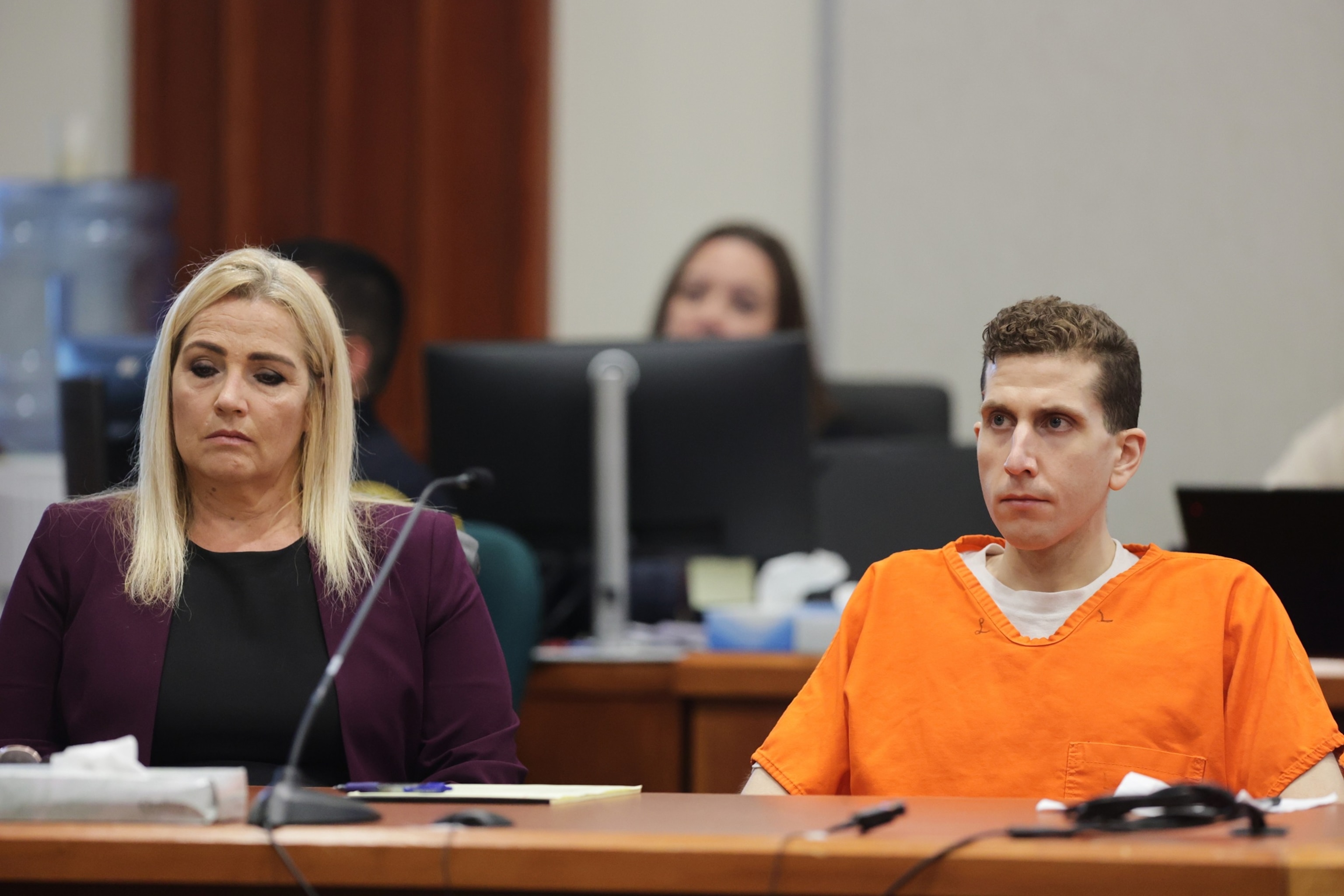
In a situation that captivated the country and brought sorrow to a university town, Bryan Kohberger has been handed four life sentences in a row with no chance of parole for the vicious killings of four University of Idaho students. This sentencing signifies a grave end to a disaster that fractured a close-knit community and prompted broader discussions about security, justice, and the emotional impact of violent offenses.
The judgment was delivered in an emotionally charged courtroom as families of the victims, lawyers, and the public came together to observe the conclusion of a case that has profoundly impacted many. Kohberger, who was once a graduate student, was found guilty of the intentional and premeditated murder of the four students—an act that shocked the nation due to its apparently irrational nature and the young lives that were lost.
The tribunal determined that the homicides were intentional and executed with such brutality that it justified the most severe punishment permitted by the legal system, short of capital punishment. Each life imprisonment is attributed to one victim, with no opportunity for parole. The judge highlighted the irreversible damage inflicted by the killings and the enduring effect on the families, friends, and the university community.
During the trial, the prosecution portrayed Kohberger as a person who carefully orchestrated the assault, applying his educational experience and understanding of criminology in unsettling manners. The case attracted notable attention because of Kohberger’s own education in criminal justice and his evident interest in criminal conduct. His scholarly background contributed a frightening aspect to the crime, leading some to speculate whether his studies impacted his behavior.
Relatives of those affected spoke in court prior to the sentencing, offering heartbreaking accounts of futures taken away and the lingering emotional impact. They mentioned missed birthdays, unrealized careers, and the deep sorrow that influences their everyday existence. Their statements highlighted the magnitude of the loss and the crucial role of justice being fulfilled.
Despite the gravity of the sentencing, many family members acknowledged that no punishment could bring back their loved ones. Still, they expressed a sense of closure, knowing that Kohberger would spend the rest of his life behind bars. For some, the sentence was a step toward healing—a way to honor the memory of the students and reclaim a sense of peace.
The residents of Moscow, Idaho, where the tragic events took place, have faced challenges in progressing after the incident. The institution, previously regarded as a secure and tranquil educational setting, was deeply affected by these events. Ceremonies, commemorations, and increased safety protocols became routine. Both students and staff have endeavored to restore a feeling of regularity while paying respects to those lost.
The investigation and trial also drew national attention to the role of technology in modern policing. Surveillance footage, digital forensics, and cell phone data were all instrumental in identifying and apprehending Kohberger. These tools helped prosecutors establish a clear timeline and build a compelling case, reinforcing how modern technology continues to shape the justice system.
Public reaction to the sentencing has been mixed. While many believe the court delivered appropriate justice, others have raised questions about broader systemic issues—such as how someone like Kohberger, who showed warning signs of violent ideation, was not identified earlier. Mental health, academic institutions, and law enforcement protocols have all come under scrutiny in the wake of the case.
As Kohberger begins his life sentences, the conversation has shifted from the courtroom to the legacy of the victims and the lessons society can draw from this tragedy. Community leaders and educators have called for improved campus safety measures, greater access to mental health resources, and open dialogue about violence prevention.
The University of Idaho has established new security measures and broadened assistance services for both students and faculty. The tragic event has additionally led to campaigns focused on teaching the youth about resolving conflicts, recognizing mental health issues, and the significance of being watchful within the community.
For the families of the victims, the path through sorrow persists. Although the legal procedures have concluded, the emotional healing is still in progress. Numerous families have dedicated themselves to honoring their loved ones’ memories by establishing scholarships, creating foundations, and engaging in advocacy. Their aim is to remember those who lost their lives and to motivate initiatives that prevent future tragedies of a similar nature.
Kohberger’s sentencing is a stark reminder of the lasting consequences of violence—not only for the victims and their families but for entire communities. As the legal system delivers its verdict, the emotional healing is just beginning for those who were closest to the victims.
Within the larger societal framework, this case emphasizes the significance of being alert, showing compassion, and having support mechanisms in place in both educational and public environments. It also stresses the necessity for continuous dialogues on how communities can react to and avert instances of severe violence.
The court’s decision closes a legal chapter, but the legacy of the four young students—whose lives were cut short far too soon—will live on through the memories of those who loved them and the actions of a community committed to change.