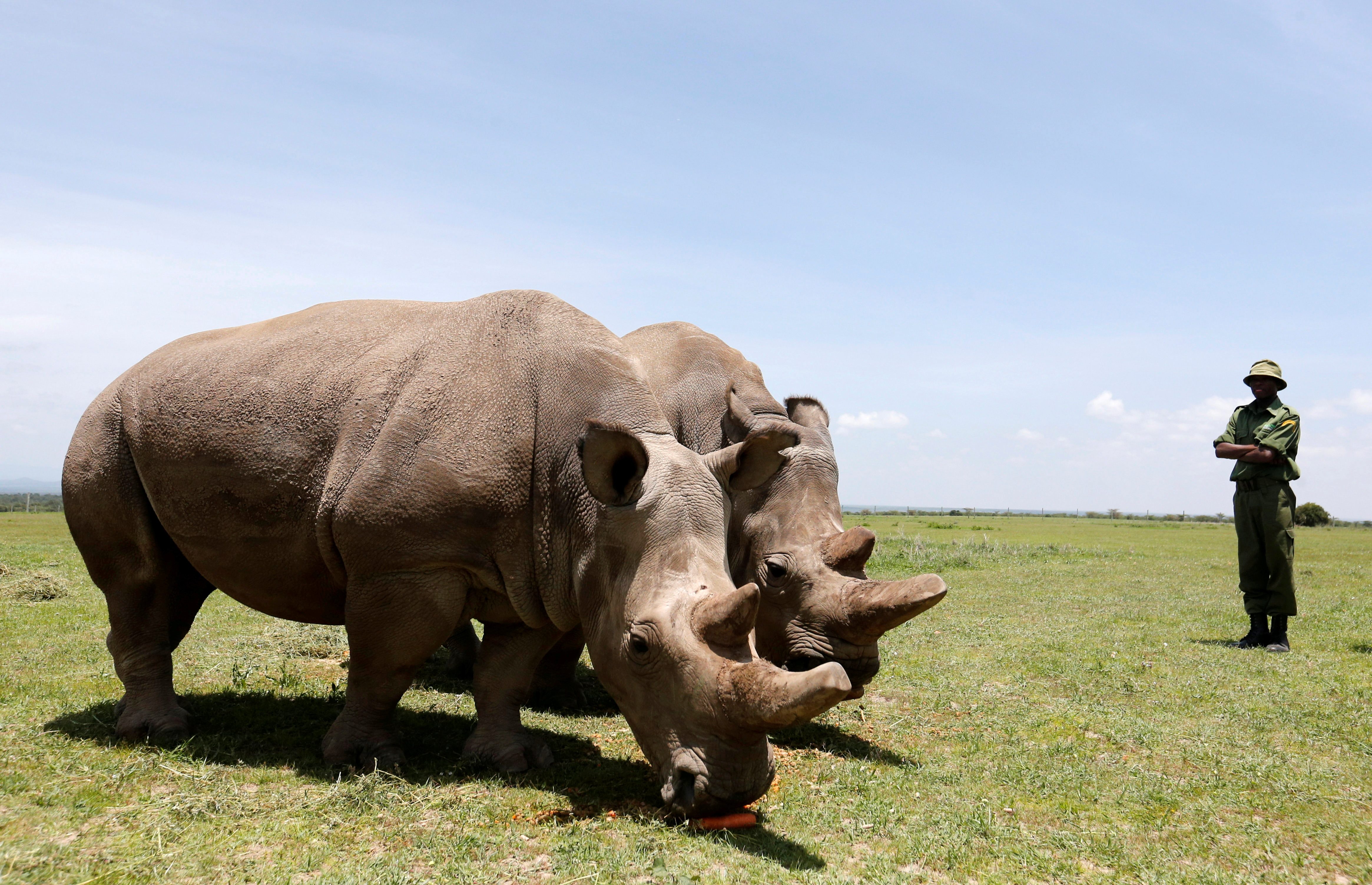
El rinoceronte blanco del norte es uno de los animales más críticamente amenazados del planeta. Actualmente, solo quedan dos de estos majestuosos seres vivos, ambas hembras que viven bajo una estricta protección. Esta realidad alarmante ha generado un esfuerzo global urgente para salvar a la especie de desaparecer para siempre. La lucha no solo se trata de conservar un animal, sino de garantizar la biodiversidad y prevenir una pérdida trágica en el patrimonio natural de la Tierra.
This emergency has led to the development of an impactful documentary portraying the final phase of the northern white rhino’s tale. The movie records the work of researchers, conservationists, and animal guardians who have committed their lives to avoiding extinction. It is a moving experience filled with hope, scientific advances, and tenacity. Although the task is overwhelming, the endeavor to restore the species proceeds via cutting-edge reproductive methods and unwavering human dedication.
The disappearance of the northern white rhino has been caused by many years of illegal hunting and loss of habitat. Their horns, greatly prized in unlawful markets, resulted in extensive slaughter across Africa in the latter part of the 20th century. Even though global trade prohibitions were enacted, the harm was irreversible. By the time significant preservation attempts started, only a few animals remained, forcing researchers to urgently seek remedies.
Currently, the pair of remaining rhinos reside in a protected reserve in Kenya, where they are constantly guarded with armed security. Known as Najin and Fatu, these rhinos symbolize both strength and fragility. They are both females and are unable to conceive, meaning traditional reproduction is not possible. Nevertheless, scientists are employing cutting-edge methods like in vitro fertilization and using surrogate females to preserve the species. This initiative is considered among the most daring conservation efforts conducted to date.
The movie highlights the personal aspect of the mission. Audience members observe the relationship between the rhinos and their guardians, who have built significant emotional ties through years of collaboration. The commitment is remarkable; numerous guardians have foregone other chances to stay with the rhinos, recognizing the historical significance of their efforts. Each day with these creatures serves as a reminder of what is at risk and what could be lost globally if the initiative does not succeed.
Scientists leading the project come from different parts of the globe, uniting their expertise for a single purpose. Laboratories in Europe and Africa have been working on collecting and preserving genetic material from the last northern white rhinos. This includes harvesting eggs from the living females and using sperm stored from deceased males. The embryos created are kept frozen, awaiting a suitable surrogate mother from a closely related species—the southern white rhino.
Although the progress in technology is remarkable, there is no assurance of success. The undertaking demands significant financial and time resources and is not without challenges. Each embryo transfer necessitates meticulous accuracy, and not all efforts will result in a successful pregnancy. Nonetheless, dedication is steadfast. For those dedicated to conservation, the mere possibility of preserving a species justifies all the exertion. This initiative symbolizes optimism in a world where species are disappearing at an alarming rate.
The movie goes beyond narrating a scientific tale; it emphasizes the human duty to safeguard endangered species. It encourages audiences to consider how human behavior has resulted in this situation and what actions can be taken to avert similar problems in the future. Climate change, destruction of habitats, and illegal hunting persist in jeopardizing numerous species, turning the northern white rhino into a representation of a significantly larger struggle.
Education plays a key role in this fight. By sharing the story through film, conservationists hope to inspire new generations to take action. Protecting biodiversity requires global cooperation, strong policies, and financial support. If the northern white rhino can be saved, it will prove that science and compassion can work together to correct past mistakes. It will also send a powerful message that extinction is not inevitable when humans choose to intervene.
The documentary is not just a chronicle of despair; it is a testament to resilience and innovation. Every scene captures the tension between loss and hope, illustrating that even at the brink of extinction, life finds a way through human determination. The survival of the northern white rhino may depend on technology, but it also relies on the world’s willingness to value and protect nature.
As the narrative progresses, it becomes evident that the battle to protect the northern white rhino transcends a single species. It is about maintaining ecological balance, celebrating the magnificence of nature, and recognizing our responsibility as caretakers of Earth. This initiative pushes us to rethink conservation possibilities and emphasizes the urgency of taking action for other threatened species now.
If this initiative succeeds, it could act as a model for the preservation of other animals nearing extinction. The insights gained from this endeavor may assist in safeguarding species such as elephants, tigers, and numerous others at risk due to human interference. The film clearly shows that extinction is not merely a scientific issue but also a moral dilemma, requiring a united effort from the community.
The path of the northern white rhino has not yet reached its end. Despite the formidable challenges, the resolve of the individuals working towards its preservation provides a glimmer of optimism. Regardless of the species’ fate, the actions taken to protect it will have a profound effect on conservation science and worldwide consciousness. This narrative serves as a testament to humanity’s ability not only to devastate but also to mend and rejuvenate.