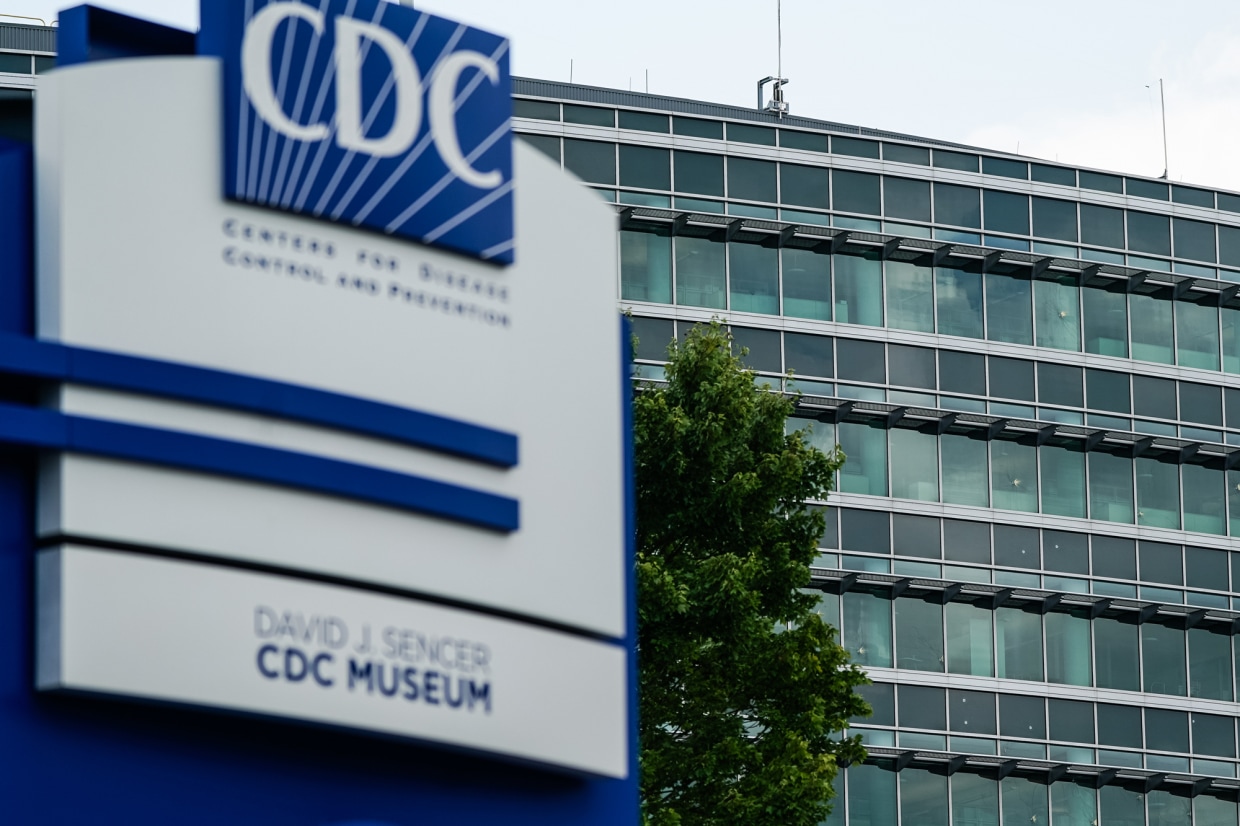
The leader of the country’s foremost public health institution recently issued an important command to her staff. During a recent gathering, she emphasized the significant dangers that misinformation presents to public health. This statement served as a straightforward reminder that, in the current digital environment, combating false stories is integral to the institution’s purpose. Her remarks underline the new difficulties in health communication in a time when trust is precarious.
Este llamado a la acción interna ocurre en un momento crucial. Los últimos años han mostrado lo rápidamente que puede difundirse la desinformación, a menudo con consecuencias devastadoras. Durante una crisis de salud pública mundial, por ejemplo, proliferaron en línea tratamientos no comprobados y teorías conspirativas. Estas afirmaciones falsas sembraron confusión y socavaron la confianza pública en las instituciones científicas. Las palabras del director fueron un reconocimiento directo de este desafío sin precedentes y del papel de la agencia en enfrentarlo de frente.
The head’s address wasn’t only aimed at the audience; it also targeted the agency’s personnel. It acted as a strong reinforcement that each employee symbolizes the entity. Their behavior, their speech, and their dedication to precision are crucial. By highlighting the need for internal cohesion, the head indicated that the agency must present a united front in its messaging. This internal emphasis is essential for guaranteeing the agency’s communications are coherent and supported by information.
Los retos de la era digital han cambiado la manera en que se consume la información de salud pública. Las plataformas de redes sociales, aunque son herramientas poderosas para la comunicación, pueden también ser propicias para la difusión de falsedades. Los algoritmos a menudo intensifican el contenido sensacionalista y polarizante, dificultando que la información precisa y basada en hechos logre destacar. Esto genera un entorno en el que una advertencia legítima de salud pública puede ser apagada por una ola de afirmaciones no verificadas, complicando más que nunca la labor de la agencia.
Misinformation, as suggested by the director’s statement, is a complex issue. It manifests in various forms, ranging from misguided but well-meaning suggestions to maliciously designed disinformation campaigns. Such deceptive stories can lead to reluctance in getting vaccinated, encourage risky self-treatment practices, and undermine the public’s trust in crucial medical science. The impacts are tangible and can be seen in cases of illness, hospital admissions, and avoidable fatalities.
The agency’s approach should be comprehensive. It requires not only addressing incorrect data but also being forward-thinking and open in its interactions. This entails utilizing straightforward language, designing simple and understandable visuals, and connecting with the audience across multiple platforms. The aim is to establish a base of trust and reliability robust enough to endure the flood of misleading content. The manager’s communication to her team is a crucial initial move in strengthening that base.
The ethical responsibilities of a public health organization are immense. Its mandate is to protect and improve the health of the public through science and evidence. The director’s warning is a reaffirmation of this core principle. It is a reminder that the agency’s work is not a political act but a scientific one. By grounding its communication in facts and evidence, the agency can maintain its integrity and provide the public with the reliable information they need to make informed decisions about their health.
Looking ahead, the threat of misinformation is only set to grow more sophisticated. The rise of new technologies, such as advanced artificial intelligence, could create even more convincing false content. The director’s warning is a prescient one, a signal that the agency must innovate its own strategies to stay ahead of this evolving threat. This means investing in new communication technologies, training staff in media literacy, and building a network of partners who can help disseminate accurate information.
In summary, the statement from the head of the CDC to her team, highlighting that “misinformation can be dangerous,” is both potent and essential. This acknowledges the changing challenges in public health communication and serves as a direct instruction to the agency’s personnel. It emphasizes that, in the current information era, upholding truth and precision is not only a professional responsibility but also crucial for public health. This declaration urges the agency to spearhead efforts with clarity, openness, and a steadfast commitment to its primary mission.
The CDC’s latest internal communication marks a pivotal moment, highlighting a significant transformation in the agency’s perspective on its responsibilities. Traditionally, their main objective centered around epidemiology, which involves understanding disease trends and their origins. Currently, this objective has broadened to encompass infodemiology, which examines the dissemination of information and its impact on health-related actions. The director’s address indicates that this emerging field has become a central element of the agency’s approach, recognizing that misleading information that spreads widely can be as detrimental as a physical virus.
This shift is a direct result of the lessons learned from the recent global pandemic. The pandemic was not just a medical crisis; it was also a public health infodemic. False claims about everything from the efficacy of masks to the safety of vaccines spread at an alarming rate, often outpacing the speed of official communication. The CDC was often forced into a reactive position, playing catch-up to counter narratives that were already deeply embedded in the public consciousness. This experience taught the agency that it cannot simply release data; it must actively and preemptively shape the public narrative.
The director’s focus on the internal staff is a crucial part of this new strategy. The agency’s vast workforce, from seasoned scientists and researchers to public relations specialists and digital content creators, must operate from a single playbook. This unified approach ensures that regardless of the source, a message originating from the agency is consistent, accurate, and free of contradictions. The director is essentially calling for every employee to be a steward of the agency’s credibility, ensuring that their work, whether it’s a research paper or a social media post, reinforces the organization’s commitment to scientific integrity.
The threat of misinformation is multi-layered, and the director’s speech reflects this complexity. It encompasses not only intentional disinformation but also the unintended spread of false information. For example, a well-meaning but ill-informed social media post can do almost as much damage as a coordinated campaign to deceive. The key, as the director emphasized, is to address the root causes: lack of trust, fear, and a desire for simple answers to complex problems. The agency’s job is not just to provide data but to provide context and understanding in a way that builds a bridge to a skeptical public.
Furthermore, the director’s directive acknowledges that the fight against misinformation cannot be won alone. The agency must collaborate with a wide array of partners, from state and local health departments to community leaders, academic institutions, and even technology companies. These partnerships are essential for disseminating accurate information through trusted local channels and for developing innovative strategies to combat misinformation where it lives. The director is signaling that the CDC must be a convenor, bringing together diverse voices to create a resilient and robust information ecosystem.
The future of this battle is already being shaped by a new wave of technologies. The advent of generative artificial intelligence (AI) poses an unprecedented challenge. Sophisticated AI models can now produce highly convincing fake images, audio, and video, making it increasingly difficult to distinguish between authentic and fabricated content. The director’s warning is forward-thinking, preparing the agency for a future where the line between fact and fiction is more blurred than ever before. This requires a new focus on digital forensics, media literacy, and the development of tools to detect and flag AI-generated falsehoods.
The leader’s message is a compelling declaration regarding the organization’s endurance and its resolve to evolve with a shifting world. It recognizes that public health science moves beyond the confines of laboratories and into the digital realm. Focusing on a coherent, cohesive, and anticipatory communication strategy, the CDC is not only bracing for upcoming public health challenges; it is establishing the foundation for a future where trust, clarity, and scientific honesty are fundamental to societal well-being. This directive clearly indicates that the organization is prepared to spearhead this important and emerging front.