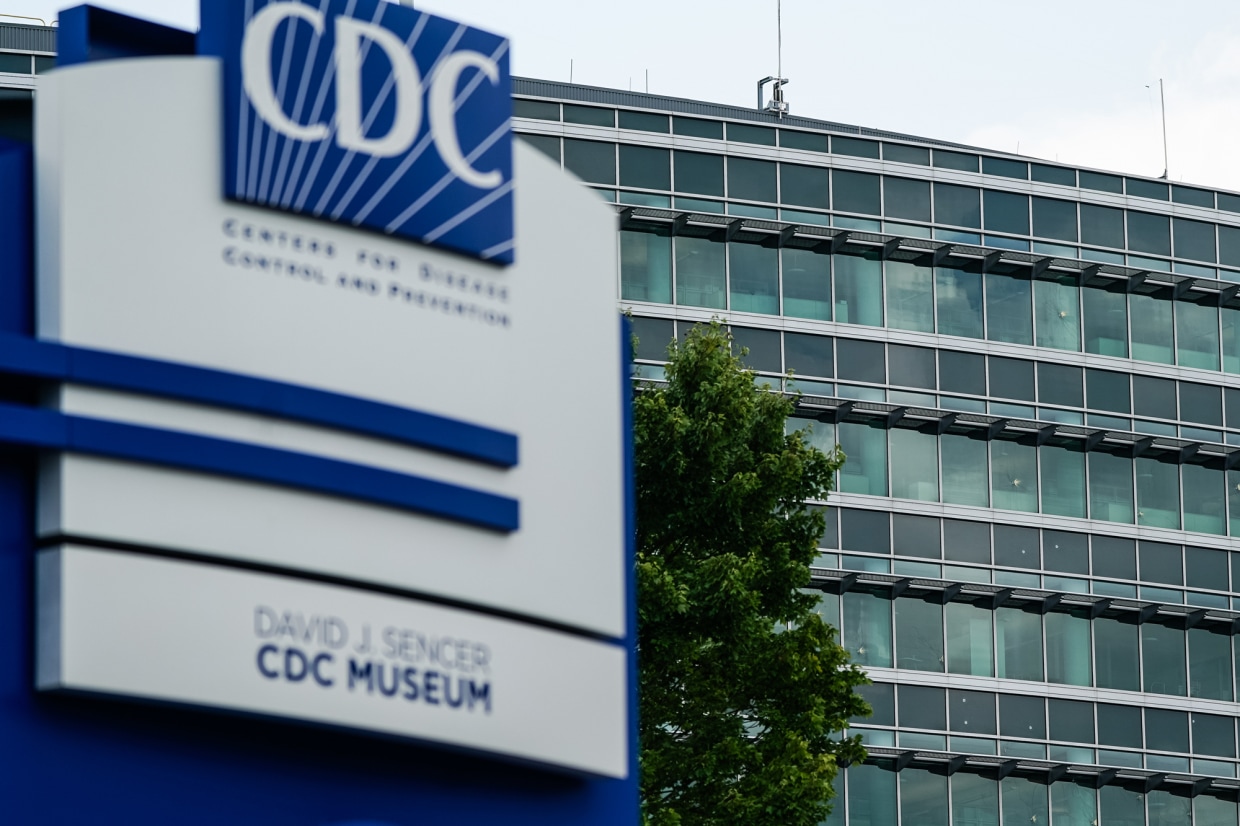
The head of the nation’s leading public health agency recently delivered a crucial directive to her employees. In a recent meeting, she underscored the profound risks that inaccurate information poses to public well-being. This message was a clear and concise reminder that in today’s digital landscape, the battle against false narratives is central to the agency’s mission. Her statement highlights the evolving challenges of health communication in an era where trust is a fragile commodity.
Este llamado a la acción interna ocurre en un momento crucial. Los últimos años han mostrado lo rápidamente que puede difundirse la desinformación, a menudo con consecuencias devastadoras. Durante una crisis de salud pública mundial, por ejemplo, proliferaron en línea tratamientos no comprobados y teorías conspirativas. Estas afirmaciones falsas sembraron confusión y socavaron la confianza pública en las instituciones científicas. Las palabras del director fueron un reconocimiento directo de este desafío sin precedentes y del papel de la agencia en enfrentarlo de frente.
The director’s message was not just for the public; it was for the agency’s own ranks. It served as a powerful reminder that every member of the staff is a representative of the organization. Their actions, their words, and their commitment to accuracy are vital. By emphasizing the importance of internal alignment, the director signaled that the agency must be a unified front in its communication. This internal focus is key to ensuring that the agency’s message is consistent and data-backed.
The challenges of the digital age have transformed how public health information is consumed. Social media platforms, while powerful tools for communication, can also be fertile ground for the propagation of falsehoods. Algorithms often amplify sensational and polarizing content, making it difficult for accurate, fact-based information to break through. This creates an environment where a legitimate public health warning can be drowned out by a wave of unverified claims, making the agency’s work more difficult than ever.
Misinformation, as the director’s statement implies, is not a simple problem. It can take many forms, from well-intentioned but incorrect advice to deliberately crafted disinformation campaigns. These false narratives can fuel vaccine hesitancy, promote dangerous self-medication, and erode the public’s confidence in life-saving medical science. The consequences are far from abstract; they can be measured in illness, hospitalizations, and preventable deaths.
The agency’s response must be multifaceted. It involves not just correcting false information but also being proactive and transparent in its communication. This means using plain language, creating clear and accessible visuals, and engaging with the public through a variety of channels. The goal is to build a foundation of trust and credibility that is strong enough to withstand the onslaught of misinformation. The director’s message to her staff is a critical first step in fortifying that foundation.
The ethical responsibilities of a public health organization are immense. Its mandate is to protect and improve the health of the public through science and evidence. The director’s warning is a reaffirmation of this core principle. It is a reminder that the agency’s work is not a political act but a scientific one. By grounding its communication in facts and evidence, the agency can maintain its integrity and provide the public with the reliable information they need to make informed decisions about their health.
Looking ahead, the threat of misinformation is only set to grow more sophisticated. The rise of new technologies, such as advanced artificial intelligence, could create even more convincing false content. The director’s warning is a prescient one, a signal that the agency must innovate its own strategies to stay ahead of this evolving threat. This means investing in new communication technologies, training staff in media literacy, and building a network of partners who can help disseminate accurate information.
In summary, the statement from the head of the CDC to her team, highlighting that “misinformation can be dangerous,” is both potent and essential. This acknowledges the changing challenges in public health communication and serves as a direct instruction to the agency’s personnel. It emphasizes that, in the current information era, upholding truth and precision is not only a professional responsibility but also crucial for public health. This declaration urges the agency to spearhead efforts with clarity, openness, and a steadfast commitment to its primary mission.
The CDC’s recent internal message is a foundational moment, demonstrating a profound shift in how the agency views its role. For decades, the primary mission was focused on epidemiology—the study of disease patterns and causes. Now, that mission has expanded to include infodemiology, the study of how information spreads and affects health behaviors. The director’s speech signals that this new discipline is no longer a peripheral concern but a core component of the agency’s strategy. It’s an acknowledgment that a viral piece of false information can be as harmful as a biological virus.
This shift is a direct result of the lessons learned from the recent global pandemic. The pandemic was not just a medical crisis; it was also a public health infodemic. False claims about everything from the efficacy of masks to the safety of vaccines spread at an alarming rate, often outpacing the speed of official communication. The CDC was often forced into a reactive position, playing catch-up to counter narratives that were already deeply embedded in the public consciousness. This experience taught the agency that it cannot simply release data; it must actively and preemptively shape the public narrative.
The head’s emphasis on the internal team is vital to this new plan. The agency’s extensive personnel, which includes veteran scientists and researchers as well as public relations experts and digital content producers, needs to work from one cohesive strategy. This coordinated method guarantees that, no matter the origin, a communication from the agency is uniform, precise, and without discrepancies. Essentially, the head is urging all employees to act as guardians of the agency’s reputation, making sure their contributions, whether it’s an academic article or a post on social media, support the organization’s dedication to maintaining scientific honesty.
The danger posed by misinformation involves various layers, and the director’s address highlights this intricacy. It includes not just deliberate deceit but also the accidental dissemination of incorrect information. For instance, a well-intentioned yet misinformed social media message can cause nearly as much harm as a strategic effort to mislead. The essential task, as emphasized by the director, is to tackle the underlying issues: absence of trust, anxiety, and a preference for easy answers to difficult questions. The role of the agency extends beyond offering information; it also involves presenting context and insights in a manner that connects with a doubtful audience.
Moreover, the instructions from the director emphasize that the battle against misinformation requires joint efforts. The agency needs to work together with various partners, including state and local health agencies, community leaders, academic organizations, and tech firms. These collaborations are crucial for spreading correct information via reliable local sources and for creating novel approaches to tackle misinformation at its source. The director is indicating that the CDC should act as a facilitator, uniting different perspectives to build a strong and adaptive information network.
The upcoming phase of this conflict is being influenced by a fresh set of technologies. The rise of generative artificial intelligence (AI) presents an extraordinary challenge. Advanced AI systems can now create extremely realistic fake images, sounds, and videos, making the task of telling apart genuine from fake content increasingly complex. The director’s cautionary advice is visionary, equipping the agency for a time when the boundary between truth and falsehood is more obscured than ever. This necessitates a renewed focus on digital forensics, media education, and the creation of methods to identify and mark AI-generated misinformation.
The director’s message is a powerful statement about the agency’s resilience and its determination to adapt to a changing world. It’s an acknowledgment that the science of public health extends beyond the laboratory and into the digital sphere. By prioritizing a clear, unified, and proactive approach to communication, the CDC is not just preparing for the next public health crisis; it is laying the groundwork for a future where trust, transparency, and scientific integrity are the cornerstones of public well-being. This directive is a clear signal that the agency is ready to lead this new and vital front.