Our website uses cookies to enhance and personalize your experience and to display advertisements (if any). Our website may also include third party cookies such as Google Adsense, Google Analytics, Youtube. By using the website, you consent to the use of cookies. We have updated our Privacy Policy. Please click the button to view our Privacy Policy.

Health

As more young people get screened, more colon cancer is being found early. Here’s how to lower your risk

Increased screenings among young people uncover colon cancer sooner. How to cut your risk

In recent times, there has been a significant change in healthcare practices, resulting in an increase in screenings for colon cancer among young adults. Consequently, instances of the disease are being identified in earlier, more manageable stages. This development is causing both hope and worry within the medical field: although early detection can greatly enhance treatment results, the increasing number of colorectal cancer cases in younger individuals continues to be a rising public health concern.Historically, colorectal cancer was viewed as a disease mainly impacting those over 50. For many years, standard medical advice suggested starting screenings at 50, with most…

Read More
How is starvation treated?

What are the treatments for starvation?

Starvation is a severe health issue caused by long-term lack of essential nutrients and energy. Treating this condition demands a thorough and carefully supervised method because the body’s functions are greatly impaired, and sudden refeeding can lead to significant health dangers. Whether it emerges during humanitarian emergencies, persistent neglect, or extreme eating disorders, managing starvation includes more than just replenishing nutrients; it also involves stabilizing various organ systems, preventing complications, and tackling root causes.Cuando el organismo se queda sin alimentos durante un tiempo prolongado, entra en un estado catabólico donde las reservas de grasa, el tejido muscular, y los órganos…
Read More
Family caregivers worry over planned Medicaid cuts' impact

Family caregivers voice concerns over Medicaid funding reductions

Across the country, family caregivers are expressing growing concern over the potential effects of proposed Medicaid budget reductions. These cuts, if enacted, could drastically alter the support systems that many families rely on to care for aging parents, disabled children, and loved ones with chronic illnesses.For millions of Americans, Medicaid is not just a public insurance program—it is a lifeline. It helps fund in-home care services, long-term care facilities, and medical equipment for individuals who might otherwise go without the attention and resources they need to survive. But for family members who take on the responsibilities of caregiving, Medicaid provides…
Read More
The world is getting hotter – this is what it is doing to our brains

How climate change is reshaping our mental functions

As global temperatures continue to climb, the effects of a warming planet are becoming increasingly difficult to ignore. From extreme weather patterns to ecological disruptions, climate change is reshaping the world we live in. One area gaining more attention from scientists is how rising heat is influencing human brain function, decision-making, and overall cognitive health.Although the bodily consequences of heat—like dehydration, heatstroke, and exhaustion—are well understood, recent research is uncovering how high temperatures might also hinder cognitive abilities. This relationship between heat and mental function is increasingly worrisome, particularly as more areas experience extended heatwaves and rising average temperatures annually.The…
Read More
Family caregivers worry over planned Medicaid cuts' impact

Medicaid program cuts: What family caregivers should expect

Throughout the nation, individuals looking after family members are increasingly worried about the possible impact of suggested Medicaid funding decreases. Should these reductions take place, they may significantly change the assistance networks that numerous families depend on to look after elderly parents, children with disabilities, and relatives with long-term health conditions.For millions of Americans, Medicaid is not just a public insurance program—it is a lifeline. It helps fund in-home care services, long-term care facilities, and medical equipment for individuals who might otherwise go without the attention and resources they need to survive. But for family members who take on the…
Read More
Trump administration is launching a new private health tracking system with Big Tech's help

Trump administration debuts private health tracking system with Big Tech support

During the Trump administration, a significant shift in health data management was set into motion through the introduction of a new private health tracking system. Developed in partnership with several leading technology companies, this initiative aimed to transform how health information is collected, stored, and analyzed, moving away from traditional public reporting structures toward a more centralized, privately managed approach.The decision to create this system marked a notable departure from long-standing practices under the Centers for Disease Control and Prevention (CDC), which had historically overseen the nation’s key health data infrastructure. The new system, launched amid the challenges of a…
Read More
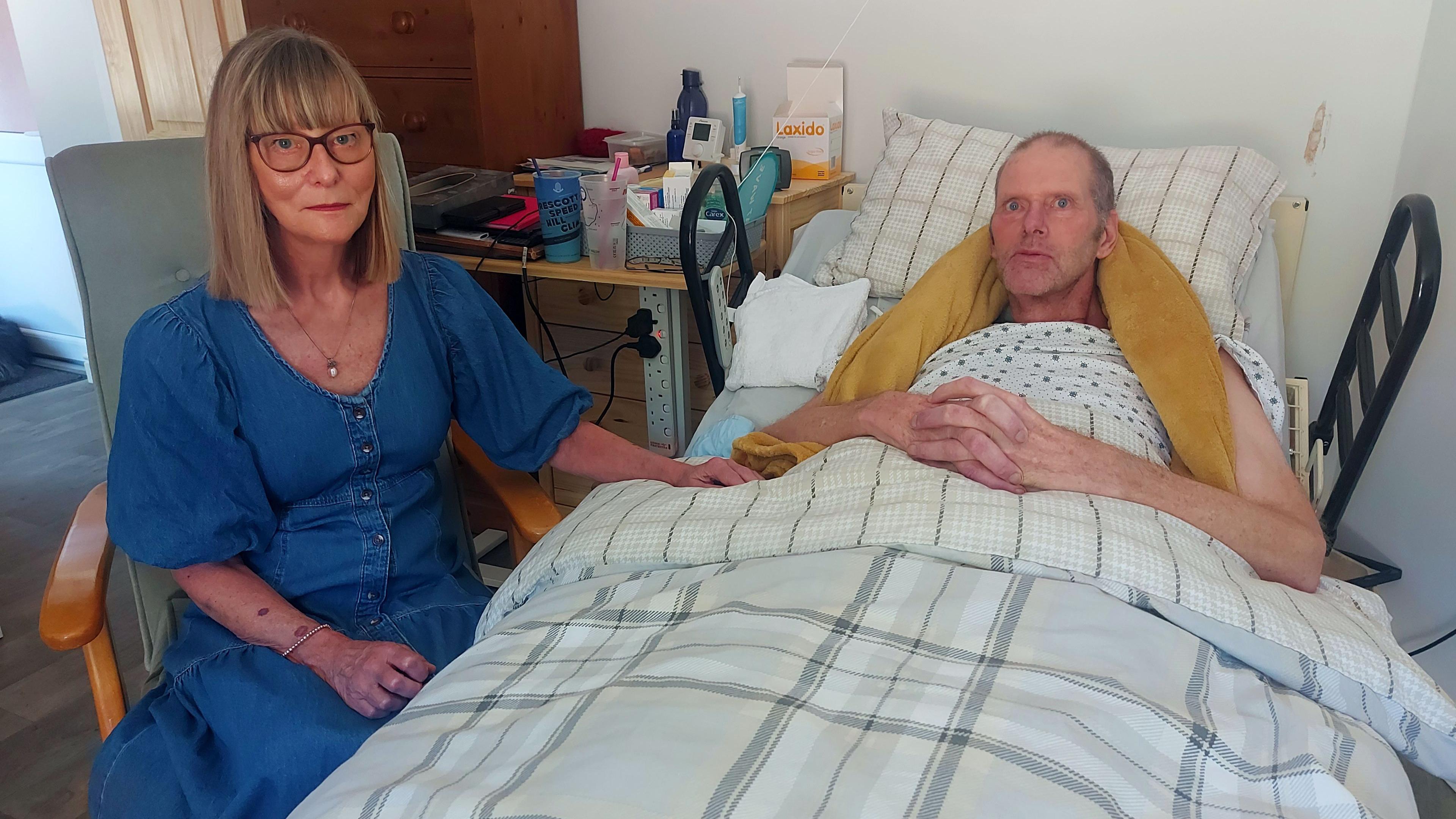
I've stopped life-saving medication says man exhausted by fight for NHS care

Life-saving medication halted as man battles for NHS care

For one patient in the United Kingdom, the effort to maintain access to essential healthcare has become an unbearable burden. After a prolonged and exhausting struggle with the National Health Service (NHS), he has made the painful decision to stop taking the medication that has kept him alive.This choice is not a reflection of his health improving or a change in medical advice. Instead, it represents the culmination of repeated obstacles, bureaucratic red tape, and a growing sense of despair. His experience brings attention to a broader issue within the NHS: the difficulty some individuals face in securing consistent, reliable…
Read More
How will Trump's E.U. tariffs affect drug prices?

Will Trump’s E.U. tariffs raise drug prices?

As trade tensions between the United States and the European Union continue to evolve, the potential ripple effects on various sectors are becoming increasingly apparent. One area of growing concern is the pharmaceutical industry, particularly how U.S.-imposed tariffs on European imports might influence the pricing and availability of medications for American consumers.The imposition of tariffs has long been a tool used to rebalance perceived trade inequalities. Under the administration of former President Donald Trump, tariff policies were aggressively pursued as part of a broader effort to reduce the U.S. trade deficit. Among the many goods targeted were products from the…
Read More
Early results from major clinical trial show healthy lifestyle slows cognitive decline

Clinical trial’s early results: healthy lifestyle helps prevent cognitive decline

Emerging data from an important clinical study indicates that upholding a healthy way of life might assist in decelerating the advancement of cognitive deterioration, bringing fresh optimism to older populations worried about memory impairment and dementia. The results offer additional scientific support for the long-standing notion that everyday actions—like nutrition, exercise, and social interaction—can affect brain health as time progresses.The initial findings, obtained from a highly extensive lifestyle research concerning cognitive abilities, suggest that individuals maintaining a range of healthy habits show a reduced decline in memory and cognitive skills versus those with less health-conscious routines. This broad, randomized study…
Read More
Alzheimer's may be delayed through lifestyle changes, new studies show

New studies reveal lifestyle changes could delay Alzheimer’s

Emerging research points to a hopeful development in the field of cognitive health: the progression of Alzheimer’s disease may be delayed, or even partially prevented, through strategic lifestyle adjustments. Rather than relying solely on medical treatments, scientists are increasingly emphasizing the importance of daily habits—particularly those related to physical activity, diet, sleep, and mental stimulation—as key factors in maintaining brain function well into old age.Alzheimer's is the leading type of dementia and impacts millions of individuals worldwide. It is marked by gradual memory decline, disorientation, and shifts in behavior, presenting an expanding public health issue, particularly with aging demographics. Although…
Read More