

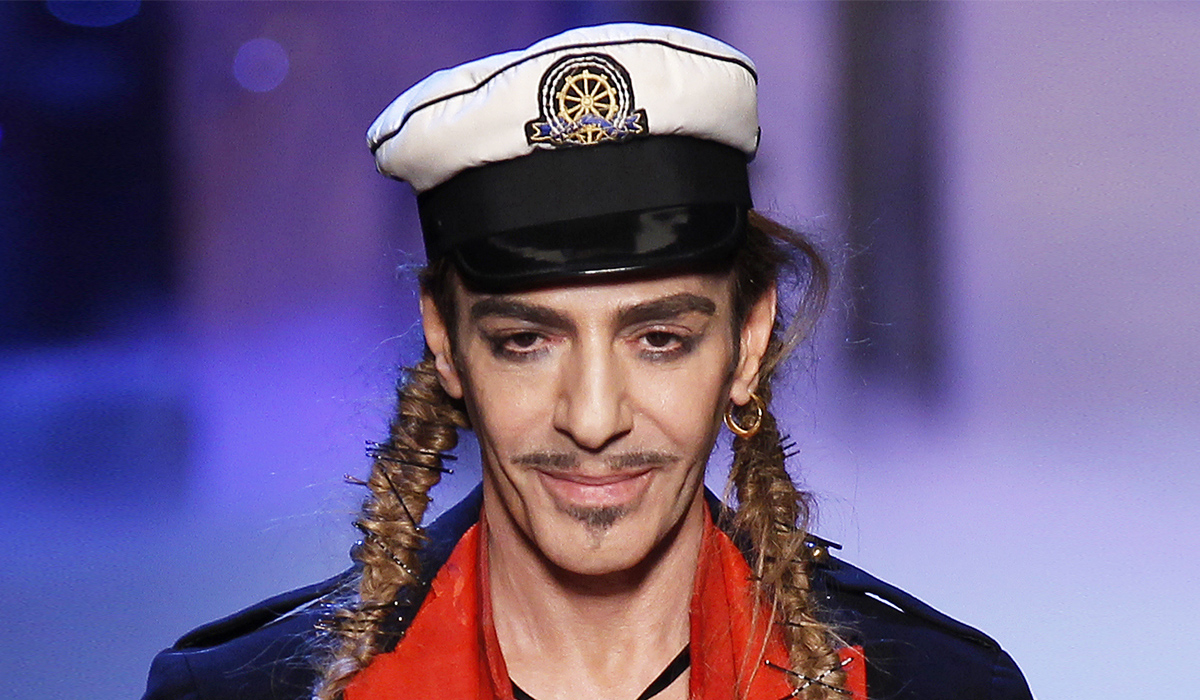
From his early years as a Central Saint Martins graduate to his groundbreaking leadership at fashion houses such as Dior and Maison Margiela, John Galliano stands as a captivating and unpredictable presence within the fashion landscape. His influence surpasses the fleeting pace of trends, shaped by a creative vision that blends theatricality, meticulous research, and constant reinvention. Understanding what makes John Galliano’s approach distinctive involves examining several interconnected elements: narrative depth, refined craftsmanship, historical inspiration, daring silhouettes, and an ever-present flair for drama.
The Theatrical Essence: Fashion as Performance
John Galliano’s runway shows function as fully immersive theatre rather than simple fashion displays, as he is celebrated for reshaping catwalks into vivid dramatic experiences that draw on opera, cinema, and episodes from history; for example, his Autumn/Winter 1994 collection for his eponymous label unfolded inside a decaying Paris mansion where models moved through dust‑filled, starkly illuminated rooms that amplified its tale of tarnished elegance, and although many designers weave performance into their work, Galliano’s method remains comprehensive, ensuring that each piece, movement, and lighting cue reinforces his unifying narrative.
The Power of Storytelling and Narrative
Galliano’s collections are built upon striking narrative concepts, as seen in his Spring 2007 Haute Couture presentation for Dior, which drew from the empresses of Imperial China, or the notorious Spring 1998 Dior lineup shaped by Paris’s homeless community—provocative and controversial, yet grounded in sharp insight and empathy. His talent for fusing storytelling with clothing remains uncommon: garments go beyond reflecting trends to evoke personas, historical moments, and emotional layers. The outcome is an immersive experience that frequently sparks discussion and occasionally ignites public debate.
Historical Reverence Meets Futuristic Vision
A profound student of fashion history, Galliano unlike many contemporaries is unafraid to mine the past for inspiration, but always with creative reinterpretation. His Fall 2000 Dior Haute Couture collection layered 18th-century silhouettes with futuristic materials, creating hybrid creations that challenged conventional temporal boundaries. Signature elements like corseting, gigot sleeves, and panniers are frequently present yet distorted or re-engineered. Galliano’s genius is found in this tension between reverence and rebellion—he honors technique while defying its limitations.
Technical Expertise and Skilled Craftsmanship
Technical prowess underpins Galliano’s vision. He is celebrated for complex constructions—bias-cut gowns that caress the body in impossible ways, precisely draped taffetas, meticulously hand-finished embroidery, and gravity-defying hats crafted in collaboration with artists like Stephen Jones. During his tenure at Dior, Galliano elevated the house’s atelier practice, insisting on couture-level artistry even in ready-to-wear. The Spring 2004 Couture show, for example, saw models balancing enormous feathered headdresses atop intricately boned dresses—a feat only possible through deft collaboration with skilled artisans.
Unconventional Silhouettes and Bold Experimentation
Galliano embraces boldly divisive aesthetics, experimenting with proportion, volume, and structure, at times stretching each element to almost surreal extremes. His trademark forms feature extended necklines, pronounced hips, or dramatically voluminous skirts set against sharply defined tailoring. Continuously pushing boundaries, he has incorporated unconventional materials like rubber, cellophane, and repurposed objects to challenge traditional notions of haute couture. The notorious Spring 2000 “tramp couture” collection reinterpreted luxury through distressed textiles, ripped hosiery, and improvised fastenings, highlighting his distinctly rebellious approach.
Identity, Provocative Elements, and Underlying Meanings
Galliano’s work often explores questions of identity, gender, and beauty, drawing on subcultures, cross‑dressing, and queer visual motifs while frequently merging masculine and feminine elements. His Spring 2006 Menswear collection featured sharply tailored jackets accented with delicate floral appliqués, a choice that echoed his ongoing fascination with subverting fashion’s traditional binary codes. Across his broader oeuvre, a subtle interplay with taboos and cultural norms consistently encourages audiences to reconsider their assumptions about beauty, social status, and gendered expectations.
Personal Legacy and Lasting Influence
Galliano’s impact extends far beyond his collections. His style has shaped the careers of numerous models, designers, and creatives—from molding the supermodel era through dramatic runway moments to mentoring emerging talent such as John Skelton. Additionally, his devotion to collaboration (with milliners, set designers, and even performance artists) has broadened the possibilities of what a designer can accomplish in the modern luxury ecosystem.
Ultimately, John Galliano’s style stands as a study in contradictions, blending historical echoes with futuristic flair, weaving romance with irreverence, and balancing painstaking detail with unrestrained imagination. These opposing forces merge into a singular, unmistakable voice that continues to inspire and push the limits of fashion as both artistic expression and social reflection.

.jpg "Panama Pensionado Visa Requirements 2026")
.jpg "How to Set Up an Offshore Company in Panama")
.jpg "How to Set Up an Offshore Company in Panama")