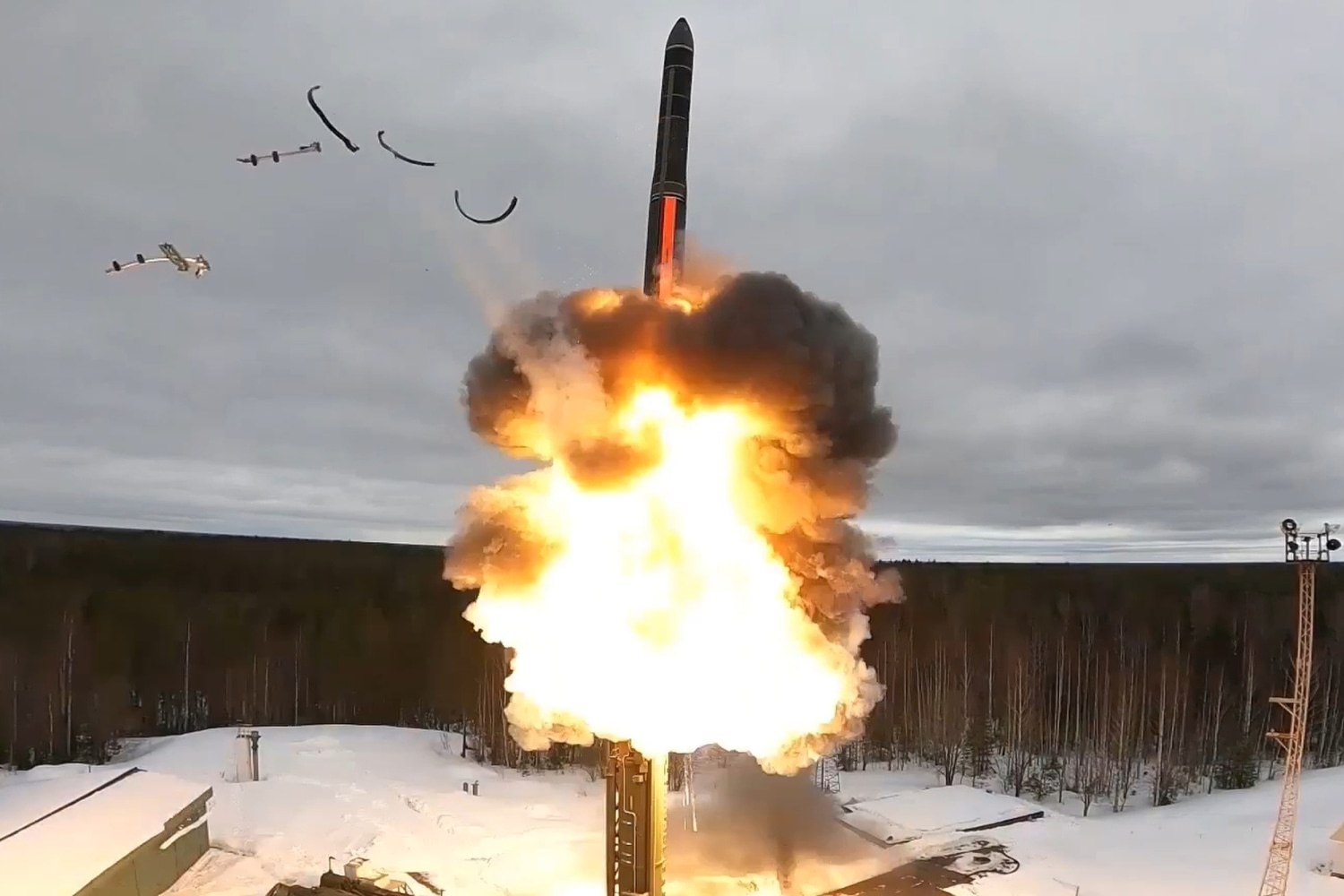
The former president of Russia has issued a stark warning to international adversaries following Moscow’s recent decision to abandon a key nuclear arms control agreement. This move signals a significant shift in global security dynamics, reflecting heightened tensions and a departure from longstanding arms control frameworks established during the Cold War and post-Cold War eras.
The treaty in question, widely regarded as a cornerstone of nuclear stability between major powers, had placed limits on the deployment and development of certain classes of nuclear weapons. Its suspension and eventual termination mark a critical escalation in the arms race, raising concerns among global leaders about the potential for renewed strategic rivalry and diminished avenues for diplomatic dialogue.
In his address, the previous leader of Russia highlighted that the Kremlin’s decision to pull back indicates a “changing landscape” in global interactions, marked by an adjustment of military strategies and geopolitical focus. He described this change as a reaction to perceived challenges and hostilities from competing countries, stating that Russia needs to adjust to a transforming security setting to protect its national goals.
This statement has highlighted the wider setting of worsening relationships between Russia and Western nations, characterized by mutual allegations of treaty breaches, increases in military presence, and economic penalties. The breakdown of arms control treaties not only weakens years of attempts to mitigate nuclear dangers but also raises doubts about future conflict avoidance strategies.
Experts express concern that without strong arms control agreements, the likelihood of errors in judgment, miscommunication, and intensification increases significantly. A lack of clear verification processes might lead to unchecked advancement of sophisticated weaponry, such as hypersonic missiles and tactical nuclear arms, making crisis management more complicated.
The Kremlin’s decision reflects Moscow’s strategic calculation amid complex security challenges, including NATO’s eastward expansion and shifting alliances in Eastern Europe and beyond. Russian officials have cited concerns about the treaty’s relevance and fairness, arguing that it constrains their defensive capabilities while adversaries pursue technologies outside its scope.
The international community has responded with a mix of condemnation and calls for renewed dialogue. Diplomatic efforts are underway to prevent further unraveling of arms control architecture, with some nations advocating for inclusive negotiations that address emerging threats and new weapon categories.
Meanwhile, defense analysts are closely monitoring Russia’s military posture and technological developments, assessing the implications for regional and global stability. The prospect of a more confrontational security environment has prompted discussions on deterrence strategies, arms modernization, and the role of multilateral institutions.
This evolving scenario underscores the fragile nature of global arms control in an era marked by geopolitical rivalry and technological innovation. The former Russian president’s remarks highlight how leadership rhetoric can influence perceptions and potentially shape the trajectory of international security.
As the world navigates this “new reality,” stakeholders face the challenge of balancing national security interests with the urgent need to prevent nuclear escalation. Strengthening communication channels, rebuilding trust, and pursuing arms control adaptations suited to contemporary challenges will be critical to maintaining strategic stability.
The breakdown of this nuclear treaty serves as a reminder of the interconnectedness of diplomacy, military policy, and international law in managing weapons of mass destruction. It also raises questions about the future of global nonproliferation efforts and the capacity of existing institutions to address emerging risks.
In the next few months, the spotlight will be on how Russia’s withdrawal from the agreement influences reactions or sparks fresh efforts to decrease conflicts. The circumstances demand balanced reactions and active participation to prevent unforeseen results that might further destabilize an already delicate security environment.
The statements from Russia’s former president and the Kremlin’s policy shift mark a pivotal moment in nuclear arms control history. How the international community responds will play a decisive role in shaping the prospects for peace and security in a rapidly changing world order.